

How to Set Up Real-Time AI Brand Monitoring
Real-time AI brand monitoring involves using automated pipelines to constantly query generative AI engines and alert stakeholders instantly when brand sentiment or visibility changes. As generative engines increasingly shape consumer purchasing decisions, establishing a reliable feedback loop from these platforms is absolutely essential. Setting up automated AI brand alerts requires configuring specific tracking prompts, scheduling checks across multiple models, and managing citation sources. This complete guide details the technical configuration for live LLM mention tracking pipelines that protect your brand and reduce crisis response times.

What is Real-Time AI Brand Monitoring?
Real-time AI brand monitoring involves using automated pipelines to constantly query generative AI engines and alert stakeholders instantly when brand sentiment or visibility changes. By actively scanning outputs across Search, API, and autonomous agent systems, marketing and communications teams can track exactly how their products are portrayed. Effective live LLM mention tracking focuses on catching sentiment shifts immediately rather than relying on delayed historical reports or manual spot-checks.
Unlike traditional search ranking trackers that look at static web indexes, generative engines dynamically reconstruct their answers based on real-time data inputs and evolving parameters. As a result, maintaining a continuous surveillance loop is necessary to prevent false statements or unverified claims from solidifying within an AI's context window. When a language model hallucinates a negative feature about your product, it can become a self-reinforcing fact if not caught and corrected through targeted content updates.
The practice goes beyond simply counting mentions. An effective setup evaluates the detailed context of the generated text, tracking whether your brand is merely listed as an option, featured as the primary recommendation, or cited with caveats. By establishing this infrastructure, organizations gain a clear, uninterrupted view of their digital reputation across the most influential platforms on the internet.
Why Automated AI Brand Alerts Are Critical
Speed is the defining factor in effective reputational management today. When a negative review or inaccurate claim enters a model's retrieval system, it can quickly compound as the model cites itself or related generated summaries in future responses. Promptly identifying and addressing these gaps protects your overall Share of Voice and ensures that potential buyers receive accurate information.
The ability to receive instantaneous notifications ensures you are not operating blindly during critical moments. According to the PwC Global Crisis Survey, real-time tracking reduces crisis response times in AI search environments by up to 80%. This massive reduction transforms a potential reputational disaster into a manageable, contained event. Teams that configure automated AI brand alerts can pivot their PR strategies immediately and correct the record before the narrative spreads.
Furthermore, automated alerts eliminate the immense manual labor required to test prompts manually. Engineering and marketing teams no longer need to spend hours each week typing the same queries into different chat interfaces. Instead, the automated pipeline handles the repetitive execution and surfacing of actionable insights, allowing human operators to focus entirely on strategy and remediation.
Phase One: Define Your Core Tracking Prompts
The foundation of any AI monitoring pipeline is the set of queries you track. Generative engines do not use traditional short-tail keywords; they process conversational prompts that reflect specific search intents and complex user scenarios. You must identify exactly what your target audience is asking when they are evaluating options.
Start by categorizing your queries into brand-specific, competitor-specific, and category-level intents. For example, instead of tracking a generic term like "CRM software," track conversational questions like "What are the best CRM platforms for small agencies?" or "How does [Brand] compare to [Competitor]?" This granular approach ensures your live LLM mention tracking captures the contexts where high-value recommendations occur.
Additionally, consider tracking "jobs-to-be-done" prompts. Users often ask AI models how to solve a specific problem rather than asking for a software category. Prompts like "How can I automate my email marketing sequence without coding?" represent significant opportunities. Mapping these workflows and adding them to your tracking queue guarantees that you are monitoring the entire customer journey, from initial problem awareness to final vendor selection.
Phase Two: Select Your AI Platform Coverage
Comprehensive monitoring demands visibility across the entire generative landscape. Relying solely on ChatGPT ignores the massive volume of queries flowing through specialized developer tools and alternative search experiences. You need a multi-platform strategy that captures different model architectures and retrieval behaviors.
PromptEden's multi-platform monitoring supports multiple AI platforms spanning search, API, and agent categories. This includes important interfaces like Google AI Overviews, Perplexity, Claude, and specialized development agents such as GitHub Copilot and Codex. By tracking these distinct environments, your setup provides a complete view of your brand's presence, ensuring you are not missing important recommendations on niche platforms.
Different models apply different safety guardrails and pull from different indexing systems. A strategy that works well for a conversational agent might fail completely in an autonomous coding environment. By broadening your monitoring scope, you can isolate platform-specific visibility issues and tailor your Generative Engine Optimization efforts to address the unique requirements of each individual engine.
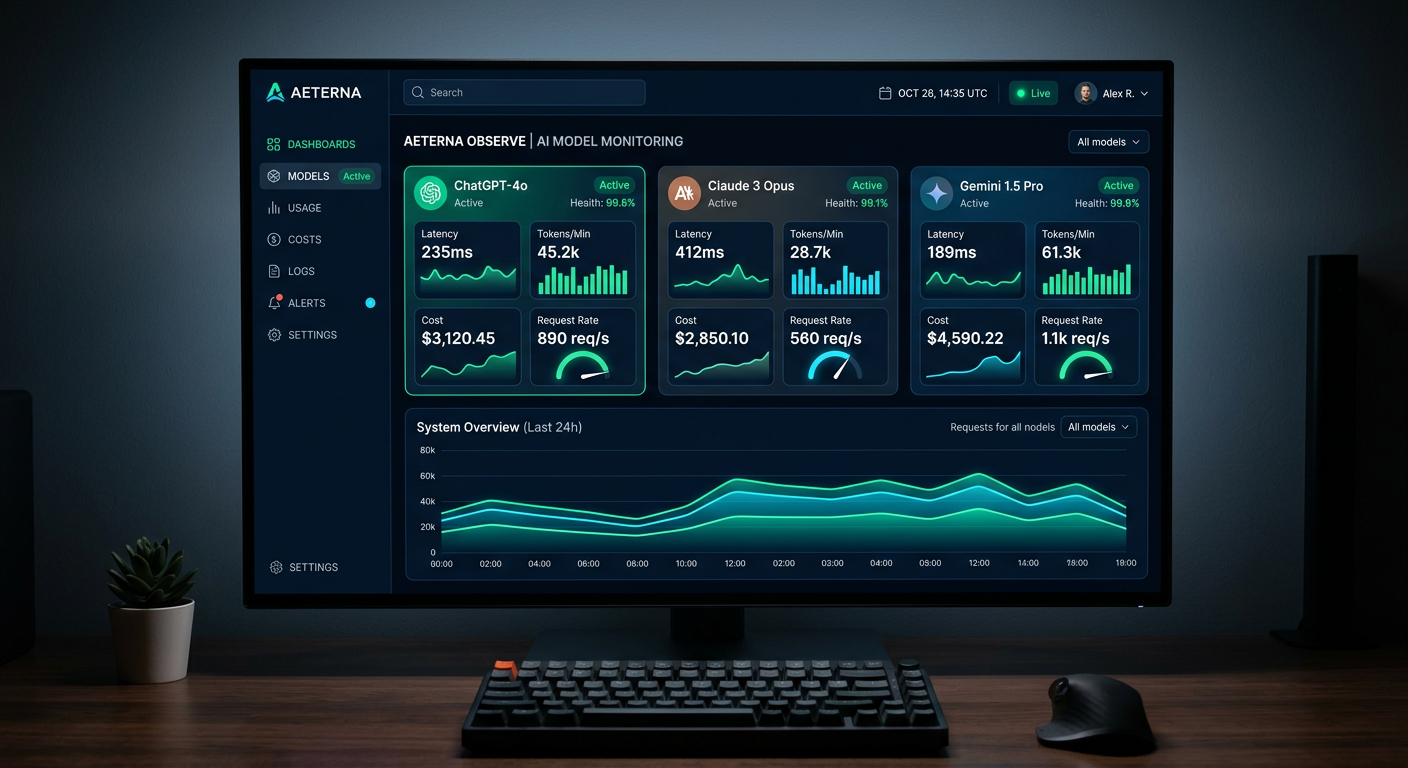
Phase Three: Configure Scheduling and Alert Intervals
Once your prompts and platforms are selected, the next phase is establishing the monitoring cadence. A true real-time system requires frequent, scheduled polling to detect sudden shifts in brand sentiment or ranking. Determining the appropriate interval depends on your industry's volatility and the volume of mentions you expect.
For baseline tracking, daily rollups are often sufficient to monitor long-term brand health. However, for active product launches, earnings calls, or crisis management, you need more aggressive polling. Setting up frequent refresh intervals allows you to monitor how quickly an AI engine updates its responses after a new press release or product announcement goes live. This frequent cadence powers automated AI brand alerts that keep your team instantly informed.
It is also important to configure threshold triggers for these alerts. Rather than receiving a notification every single time a prompt is executed, establish baselines. Configure the system to alert you only when your Visibility Score drops by a specific percentage, or when a designated competitor suddenly begins appearing in top recommendations. This intelligent filtering prevents alert fatigue and ensures that your team only reacts to statistically significant changes.
Phase Four: Monitor Citation Intelligence and Sources
Knowing that an AI mentioned your brand is only half the battle; knowing why it mentioned your brand is equally important. Generative engines construct their answers based on retrieved documents, making source tracking an essential component of your monitoring strategy. If an AI is generating false claims, those claims are almost certainly originating from an indexed article or forum thread.
Citation Intelligence allows you to track which sources AI models cite when mentioning your brand. By extracting cited URLs and aggregating citation counts per domain over time, you can pinpoint the specific articles, Reddit threads, or YouTube videos driving your AI visibility. When you understand the origin of a negative mention, you can launch targeted PR campaigns to correct the underlying source material, effectively treating the disease rather than the symptom.
Regularly reviewing your citation profile also uncovers hidden partnership opportunities. If you discover that a specific industry blog is consistently cited by Perplexity when recommending your category, that publication becomes a high-priority target for guest posts, sponsorships, or direct outreach. Mapping this ecosystem transforms reactive monitoring into a proactive growth channel.
Phase Five: Measure Visibility Score and Share of Voice
The final step in your real-time AI brand monitoring setup is translating raw data into actionable metrics. A continuous stream of text alerts can quickly become overwhelming without a structured way to quantify performance. You need composite metrics that clearly communicate success to stakeholders and leadership teams.
The Visibility Score provides a standardized metric based on four dimensions: Presence, Prominence, Ranking, and Recommendation. This metric, combined with Organic Brand Detection that automatically discovers competitor mentions, allows you to track your Share of Voice. By establishing these benchmarks, you can conclusively prove the return on investment of your content optimization efforts and identify exactly where your brand leads or lags behind the competition.
Tracking these metrics over time via Trend Analysis reveals the long-term impact of your AEO strategy. When you launch a new features page or update your documentation, you can directly correlate those actions with an upward trajectory in your Recommendation score. This data-driven approach ensures that your marketing investments are yielding tangible improvements in the AI search landscape.
Common Pitfalls in Live LLM Mention Tracking
Implementing a monitoring pipeline requires careful attention to detail. One common mistake is tracking overly generic terms that produce noisy, irrelevant alerts. If your prompts are not highly specific to your product's unique value proposition, your team will suffer from alert fatigue and begin ignoring notifications. Precision is paramount when configuring your initial query set.
Another pitfall is focusing exclusively on one model. Different language models exhibit varied biases based on their training data and safety guardrails. An over-reliance on a single engine can create a false sense of security, causing you to miss significant reputational damage occurring on an alternative platform. Always ensure your monitoring setup encompasses a broad, representative sample of the generative AI ecosystem.
Finally, many teams fail to establish an escalation protocol. Automated AI brand alerts are useless if there is no designated owner to evaluate and respond to the notification. Before launching your pipeline, define clear roles and responsibilities. Determine who assesses the alert, who initiates the content update, and who communicates with external stakeholders. A well-defined workflow ensures that your real-time data translates into real-time action.