

How to Monitor AI Brand Rankings and Recommendation Lists
Monitoring AI brand rankings lists is the practice of tracking your brand's presence, position, and sentiment within the comparative top tools or best software lists generated by AI models. With generative engines becoming the default research starting point, understanding your Share of Model determines your pipeline volume. Learn the systematic approach to tracking, measuring, and influencing your placement in these AI-generated recommendations.

What Are AI Recommendation Lists and Why Do They Matter?: monitoring brand rankings lists
Generative engines have changed how buyers research software, services, and products. Instead of clicking through ten blue links and opening multiple tabs, users now ask AI platforms for direct recommendations. They use prompts like, "What are the best CRM tools for a small agency?" or "Compare the top email marketing platforms." In response, the model synthesizes information from across the web and generates a clean, readable listicle.
Monitoring AI brand rankings lists is the practice of tracking your brand's presence, position, and sentiment within the comparative 'top tools' or 'best software' lists generated by AI models. This process isn't a vanity exercise. It's a required revenue operation. When an AI model answers a high-intent commercial query, the brands it recommends capture the majority of the downstream traffic.
The click-through dynamics here are stark. Being listed at the top of an AI-generated recommendation list significantly increases click-through rates to citations. Users trust the models to do the hard work of evaluation. If your brand appears further down, or worse, gets completely excluded from the response, you lose access to a highly qualified buyer who is ready to make a decision. Data reinforces this, showing that brands cited within an AI Overview earn significantly more organic clicks than those not cited.
Understanding where you stand requires a shift in mindset. Traditional rank tracking looks at static web pages on a search engine results page. AI monitoring looks at dynamic, generated answers that change based on the model, the user's prompt, and the underlying training data. You need a systematic way to measure your performance across these new surfaces to protect your market share.
Helpful references: PromptEden Workspaces, PromptEden Collaboration, and PromptEden AI.
The Anatomy of an AI "Top Ten" Recommendation
When an AI model generates a listicle, it doesn't query a single database table. It relies on a combination of its base training data, fine-tuning for helpfulness, and real-time retrieval-augmented generation. To monitor AI brand rankings lists accurately, you need to understand the components that make up a successful appearance.
First, consider Presence. This is the baseline metric. Does the AI mention your brand at all when asked about your category? If a user asks Claude for top billing software and your product isn't in the output, your presence is zero for that specific prompt.
Next is Prominence. Just because you are mentioned doesn't mean you stand out. Prominence measures how featured your brand is within the response. A passing mention in a concluding paragraph carries far less weight than a dedicated bullet point with a bolded heading and a detailed description of your features.
Ranking position is the third element. Where does your brand appear in the list? Models tend to list the most authoritative or commonly cited tools first. Earning the number one or number two spot signals strong category association. The drop-off in attention after the top three items is steep, mirroring traditional search behavior but compressed into a smaller reading window.
Finally, evaluate the Recommendation quality. Does the AI actively recommend your brand for specific use cases? A model might list your product but add a caveat that it is outdated or hard to use. A positive, context-rich recommendation that highlights your specific strengths is the goal. When you track these four components together, you get a clear picture of your actual Share of Voice in the generative landscape.
How to Track Your Brand in AI Rankings
Building a solid tracking operation requires moving away from manual spot-checks. Typing a few questions into ChatGPT once a month won't give you reliable data. You need a structured approach to capture how different models respond to your core commercial intent queries.
Step One: Define Your Core Comparative Prompts Start by identifying the exact queries your buyers use when evaluating options. These are typically comparative or list-seeking prompts. Examples include "Top alternatives to competitor X," "Best software for remote teams," or "Compare product A and product B." Group these prompts by product line or buyer persona. You want a comprehensive list of high-value queries that directly impact your pipeline.
Step Two: Establish Multi-Platform Baselines Different AI platforms yield different answers. ChatGPT uses its own search preview, Perplexity relies on live web grounding, and Google AI Overviews blends generative text with traditional index data. You must monitor brand mentions across a wide spectrum of platforms. PromptEden tracks visibility across five AI surfaces: ChatGPT, Claude, Gemini, Google AI Overviews, and Google AI Mode. This broad coverage prevents blind spots.
Step Three: Auto-Discover Real Competitors You might know who your traditional business competitors are, but AI models often introduce unexpected alternatives. An open-source project or an adjacent tool might be claiming the top spot in the AI's recommendations. Use tools with Organic Brand Detection to automatically discover competitor mentions in AI responses. This feature extracts brand entities from the generated text, showing you who the AI views as your true peers in the market.
Step Four: Map Citation Sources When an AI like Perplexity lists your brand, it usually cites its sources. Knowing which websites the AI trusts is valuable. Citation Intelligence allows you to track which sources models cite when mentioning your brand. If the model consistently pulls information from a specific software review page or a particular industry blog, you know where to focus your PR efforts. This source-level tracking connects the generated output back to the underlying web content.
Measuring Share of Model (SoM) and Visibility Score
You can't improve what you can't measure. In the context of AI search, traditional metrics like keyword search volume and organic traffic only tell half the story. You need new key performance indicators that reflect the realities of generative answers.
Share of Model (SoM) is the primary metric for competitive benchmarking. It calculates the percentage of time your brand is mentioned compared to your competitors across a defined set of prompts. If you run various queries about enterprise accounting software across different models, and your brand appears in several of the responses, your SoM is proportionally high. Tracking this metric over time shows whether your market presence is growing or shrinking.
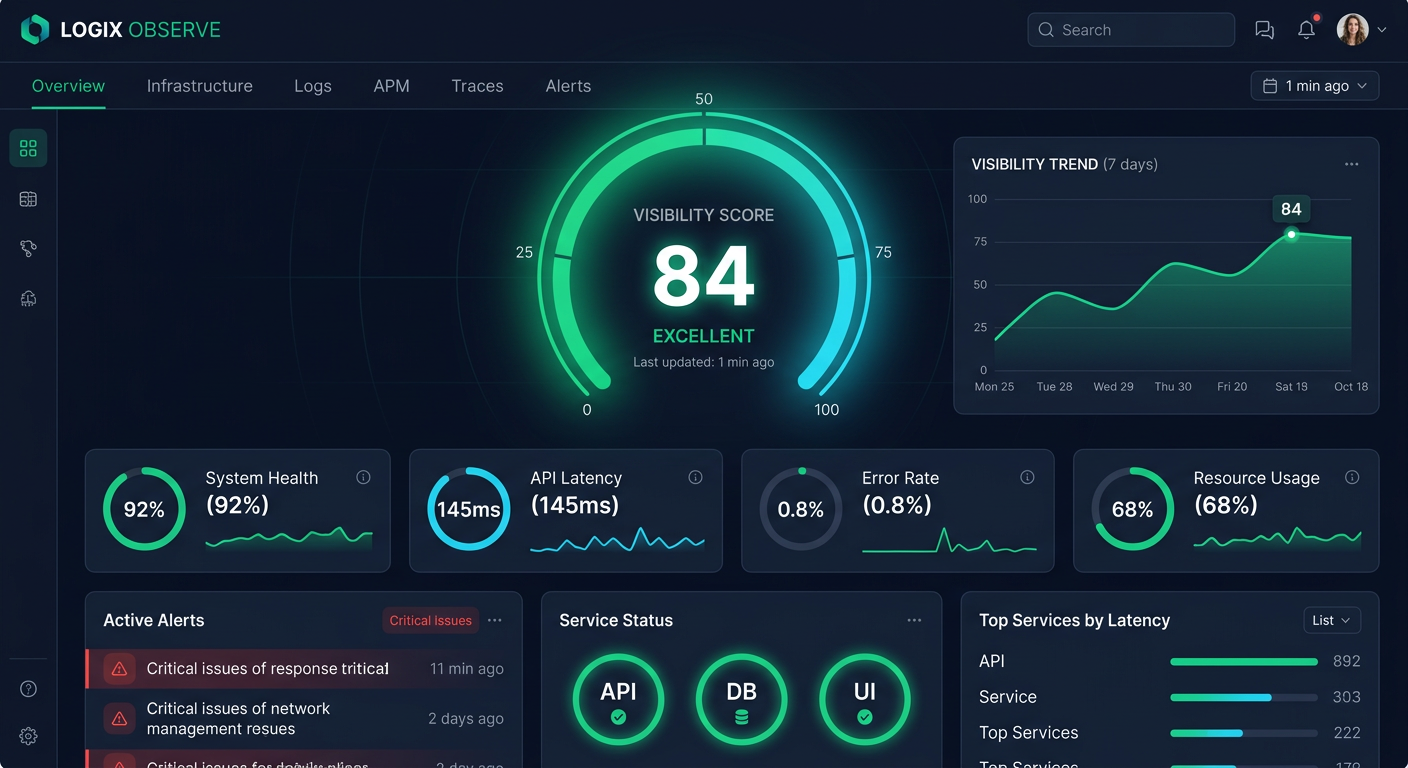
To provide a more detailed view, PromptEden uses a composite Visibility Score. This metric goes beyond simple presence. It combines the four key dimensions: presence, prominence, ranking, and recommendation quality. A high score indicates that your brand is frequently mentioned, highly placed in listicles, and positively described. A low score suggests you are mostly ignored or relegated to the bottom of the lists.
Consistent monitoring is necessary because AI responses fluctuate. A model update, a shift in training data, or a new competitor piece of content can alter the rankings overnight. You should review your trend analysis regularly, looking at historical visibility tracking with daily rollups. This allows you to catch negative shifts early and adjust your content strategy before the drop in visibility impacts your inbound lead flow.
Strategies to Influence Your AI Ranking Position
Once you have a clear understanding of your current visibility, you can take deliberate steps to improve it. Answer Engine Optimization (AEO) is the practice of improving how often AI assistants mention and recommend your brand.
The most common mistake marketing teams make is ignoring the specific formats that AI models prefer to ingest. Most guides overlook the listicle format that AI relies on for comparative queries. Models are trained to recognize and extract structured comparisons. If you want to appear in a recommendation list, you need to publish content that is formatted as clear, objective, and well-structured lists. Create your own comparison pages that use distinct headings, bulleted feature sets, and concise summaries. The easier you make it for the AI parser to read your content, the more likely it is to use your site as a source.
Next, focus on improving your citation-source coverage. Models don't just read your website. They synthesize reviews, forums, and third-party articles. Look at the data from your Citation Intelligence tracking. Identify the top domains that the models frequently cite for your target prompts. If a specific industry publication is heavily referenced by Perplexity, you need to ensure your brand is accurately represented on that publication's site. Guest posts, PR outreach, and updated directory listings directly influence what the AI knows about your category.
Maintain structural consistency across all digital touchpoints. AI models look for consensus. If your website describes your product as a marketing automation platform, but a major review site lists it as an email tool, and your press releases call it a customer engagement solution, the model gets confused. Confused models default to other, clearer brands. Standardize your product descriptions, features, and use cases everywhere your brand appears online. This unified signal gives the model the confidence to place you high in its recommendation lists.
Common Pitfalls in LLM Monitoring
As teams rush to adapt to AI search, they often fall into predictable traps that hurt their tracking efforts. Avoiding these mistakes ensures your data remains accurate and actionable.
The first common mistake is treating AI visibility like traditional rank tracking. Traditional SEO assumes a static, universal search engine results page. AI responses are dynamic and varied. Checking a single prompt on ChatGPT once and assuming that represents your entire market position is dangerous. You must track performance across multiple models and multiple variations of a prompt to get a true average. Relying on a single data point leads to false confidence.
Another frequent error is relying on manual, un-versioned prompts. Having a team member manually type queries into a browser interface introduces human error. The prompts might change slightly each time, or the person might forget to check a specific model. Automated prompt tracking with scheduled monitoring ensures consistency. You can track response changes over time reliably, knowing the exact same query was sent to the same API endpoint.
Finally, many teams ignore the impact of specialized models. While consumer chat interfaces get the most attention, they aren't the only platforms making recommendations. For developer tools and technical products, autonomous coding agents hold a lot of influence. PromptEden provides agent decision monitoring for tools like ChatGPT, Claude, Gemini, Google AI Overviews, and Google AI Mode. If you only monitor consumer search engines, you'll miss how technical buyers and their AI assistants evaluate your product inside their development environments. Tracking the full spectrum of models is the only way to protect your brand in generative search.