

How to Optimize Pricing Pages for AI Comparison Agents
AI search engines and autonomous coding agents now act as middlemen between buyers and software vendors. The readability of your pricing page matters more than ever. Making your pricing pages work for AI comparison agents means structuring cost data and feature matrices so LLMs extract and present your pricing accurately against competitors. This guide covers formatting strategies to help ChatGPT, Claude, and Perplexity get your pricing right every time.

The New Intermediary: Why AI Models Misquote Software Pricing: optimizing pricing pages comparison agents
Buyers no longer want to click through complex feature matrices to understand how much a software product costs. Instead, they ask AI tools to evaluate the market. A common prompt looks like: "Compare the pricing of Product A and Product B for a team of designers."
When this happens, the AI model goes to the respective pricing pages to extract the data. AI models frequently guess or hallucinate pricing when it sits in complex CSS or interactive sliders. When your pricing hides behind a toggle switch, an interactive calculator, or dynamic JavaScript that only loads when a human scrolls, the AI crawler sees an empty page or generic text. The extraction model fails to map the cost to the specific tier. The LLM then guesses the price based on outdated training data or returns a wrong figure entirely.
This causes a major failure point in modern marketing. This disqualifies you from the buyer's consideration set. You lose the deal before you even knew you were in the running because the buyer's trusted AI assistant gave them bad data.
To fix this, companies must shift from human-only design to dual-audience design. The pricing page must look good for human buyers while remaining structurally semantic for AI agents. This shift is the foundation of agentic pricing optimization. If the machine cannot read the value you offer, the human buyer will never see it. Understanding the cost of failure here is important for any growth team relying on inbound demand.
Helpful references: PromptEden Workspaces, PromptEden Collaboration, and PromptEden AI.
How Do AI Models Read Pricing Pages?
Understanding how AI models read pricing pages is the first step in fixing the problem. Unlike a human who uses visual cues to understand that a column represents a specific tier, an AI model relies on HTML structure, text proximity, and underlying code. Modern AI systems use extraction methods where an LLM visits a site, reads the Document Object Model, and attempts to return structured data.
When evaluating your page, the model looks for specific patterns. It searches for clear parent-child relationships between the name of the plan, the cost, the billing cycle, and the included features. For example, if the plan name is at the top of a column, and the price is listed below it, a human understands the relationship. If the HTML structure separates the plan name and the price into different container blocks with no semantic link, the LLM comparison formatting breaks down. The model might assign the enterprise price to the starter plan, creating a lot of confusion.
AI tools also struggle with implicit constraints. If the price is listed as a flat rate, but a small tooltip explains that it applies per user, the AI might miss the tooltip. It then tells the buyer that the total cost for the team is a fraction of the price, setting false expectations and ruining trust. The tokenization process that LLMs use to digest web pages strips away visual hierarchy, leaving only the raw sequence of words. If the sequence does not logically explain the pricing rules on its own, the AI will fail to parse it.
By understanding these limitations, marketers can adopt a more reliable approach to AI pricing extraction. This ensures the data provided to the AI is explicit, structured, and impossible to misunderstand.
Core Best Practices for AI Pricing Extraction
When designing your pricing page, you must optimize for AI comparison agents by adopting strict formatting rules. Here are the core best practices for tabular pricing data to help you secure the featured snippet and ensure accurate AI extraction:
- Use semantic HTML headings: Structure your pricing tiers using clear heading tags. Make the plan name a secondary heading, and keep the price text in close physical and structural proximity. The closer the price is to the header in the raw code, the easier it is for the AI to connect them.
- Implement explicit Schema markup: Use structured data to define the product, the currency, the price, and the billing cycle. This provides a machine-readable layer that bypasses visual formatting. When an AI agent encounters valid schema, it prioritizes that data over attempting to scrape the visual layout.
- Explicitly state billing units: Never leave the billing unit implied. Write out "per user, per month, billed annually" in plain text. Do not hide this important context inside a hover state or an asterisk footnote, as crawlers often ignore these interaction states.
- Provide static fallback content: If your pricing relies on an interactive slider to calculate costs based on usage, provide a static text summary below it. For example, explicitly write out baseline tiers so the AI has concrete data points to anchor its response.
- Create a dedicated token or credit section: For products in the generative space, define how credits map to usage. AI agents are often tasked with calculating the true cost of an API. Making the conversion rate explicit reduces hallucination.
- Avoid complex tabbed interfaces: Toggling between monthly and annual pricing might look good, but it can confuse basic crawlers. Ensure that the text for both pricing options is accessible in the raw HTML, even if one is visually hidden via styling.
These practices bridge the gap between human experience and machine readability. Following this framework helps ensure that when an AI evaluates your product, the extracted cost data aligns with your business model.
Formatting Feature Matrices for LLMs
Beyond the raw cost, buyers ask AI tools to compare what is included in each tier. This is where LLM comparison formatting becomes essential. A feature matrix is traditionally a large grid with checkmarks, cross marks, and explanatory tooltips. For an AI, a grid of visual checkmarks means nothing.
When the AI crawler scans a table full of SVG icons instead of text, it registers a blank cell. The buyer then receives a comparison table stating that your product lacks basic functionality, because the AI could not read the checkmark icon. To resolve this, you must use accessible text. Instead of just an icon, include hidden text via aria-labels that says "Included in Pro plan" or use standard text symbols that the AI can interpret.
Alternatively, summarize the core differentiators in a bulleted list above or below the visual table. Natural language summaries work well for AI parsing. Underneath the pricing block, write a short, one-sentence summary of the ideal user for that tier. For example: "The Starter plan is ideal for solo developers and includes basic integrations, whereas the Pro plan supports growing teams with advanced security features."
This gives the AI a clear, citable soundbite. When the buyer asks the agent which plan is best for their specific needs, the AI can quote your natural language summary directly. By translating visual feature grids into semantic text formats, you help keep your positioning intact during the automated comparison process.
Troubleshooting Common AI Pricing Extraction Failures
When optimizing pricing pages for AI comparison agents, you will encounter extraction failures. The most common issue occurs with single-page applications where the pricing data renders client-side via JavaScript. Since many basic AI crawlers do not execute JavaScript fully, they ingest the initial blank HTML state. To troubleshoot this, implement server-side rendering or static generation for your pricing routes.
Another frequent failure involves regional pricing localization. If your pricing page dynamically changes currency based on the IP address of the visitor, an AI crawler pinging your site from a data center might extract the wrong localized price. The LLM then presents a foreign currency to your domestic buyer. Providing a clear, text-based currency toggle or stating the default currency in your schema markup helps avoid this issue.
Finally, watch out for custom enterprise tiers. Hiding the enterprise price is a standard sales tactic, but AI models hate ambiguity. If they cannot find a number, they often scrape third-party review sites to guess the cost, which can lead to wrong numbers. To prevent this without revealing your exact contract sizes, provide a starting baseline, such as "Enterprise plans start at a baseline monthly fee." This gives the AI a grounded anchor point instead of leaving it to guess.
Agentic Pricing Optimization and Dynamic Context
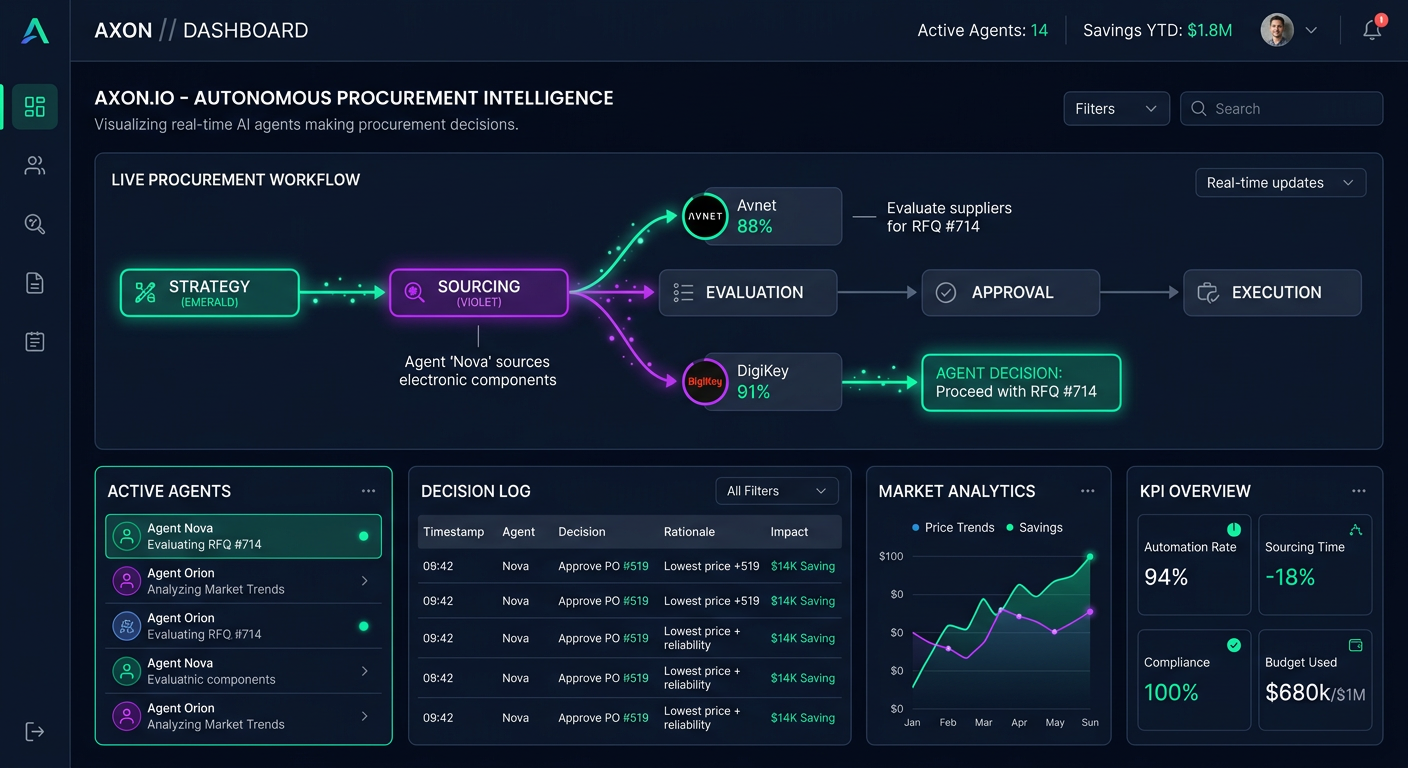
As the market shifts, we are moving beyond static pricing models toward agentic pricing optimization. This represents an evolution from traditional, rules-based dynamic pricing to goal-oriented, autonomous adjustments driven by AI. In an agentic system, AI controllers ingest real-time state data, such as competitor movements and market demand. They then define goals based on desired margins or volume metrics and execute strategy autonomously.
When your competitors use autonomous pricing adjustments, your pricing page must remain resilient. AI comparison agents often scrape these pages to update their internal benchmarks. If your page structure changes too much or lacks semantic stability, the comparison agents will drop you from their recommendations in favor of competitors with more reliable data feeds. The format of your data is just as important as the price itself.
Maintaining a clean, machine-readable structure is no longer just about standard SEO. It is about participating in an automated economy where agents negotiate, compare, and recommend solutions without human intervention. Your pricing page acts as your primary API to the world of AI search. If you format it correctly, you enable automated procurement systems to easily ingest your offerings.
Monitoring Your Pricing Visibility Across AI Models
Even with good optimization, you cannot improve what you do not measure. You must verify that your formatting changes influence how AI agents read your pricing. This requires tracking across the generative ecosystem. Relying on assumptions poses risks when dealing with unpredictable language models.
PromptEden provides the infrastructure to monitor your brand visibility and pricing accuracy across multiple platforms, spanning search, API, and autonomous agent categories. By setting up targeted queries, you can track how different models respond when asked to compare your pricing against competitors. You can input prompts like "What is the most cost-effective plan for our brand?" and observe the raw output.
If an AI model misquotes your enterprise tier, PromptEden highlights this discrepancy in the responses. You can view the outputs, identify the hallucination, and adjust your pricing page formatting. Through Organic Brand Detection, you can discover which competitor pricing models the AI favors. This gives you a strategic advantage in structuring your own feature matrix.
By treating your pricing page as a dynamic asset and using dedicated measurement tools, you ensure your product is accurately represented in the important moments when buyers ask AI for advice. Consistent monitoring bridges the gap between your intended pricing strategy and the reality of machine interpretation.