

E-E-A-T for AI Visibility: How to Build Authority Signals That Earn Citations
Every AEO guide mentions E-E-A-T as critical for AI citation, but few explain how to build those signals specifically for AI platforms. This guide breaks down each E-E-A-T component into concrete actions that increase your chances of being cited by ChatGPT, Perplexity, Google AI Overviews, and other AI search engines. You will learn which authority signals AI models weight most heavily, how they differ from traditional Google ranking factors, and how to measure whether your improvements are working.

How Do E-E-A-T Signals Influence AI Citations?
E-E-A-T for AI visibility is the practice of building Experience, Expertise, Authoritativeness, and Trustworthiness signals that AI models use when deciding which sources to cite. Google introduced the framework for human quality raters, but the same principles now shape how AI search engines select and reference content.
Traditional SEO practitioners already know E-E-A-T from Google's Search Quality Rater Guidelines, last updated in September 2025. What has changed is the context. In traditional search, E-E-A-T influenced rankings indirectly through quality rater feedback loops. In AI search, the connection is more direct: AI models evaluate source credibility during retrieval and synthesis, and weak authority signals can disqualify a page before the model even reads its content.
The guidelines state it plainly: "Trust is the most important member of the E-E-A-T family because untrustworthy pages have low E-E-A-T no matter how Experienced, Expert, or Authoritative they may seem." That hierarchy carries over to AI citation. A page with deep expertise but questionable accuracy will lose to a less detailed page from a trusted institution.
Research from Wellows found that 96% of AI Overview citations come from sources with strong E-E-A-T signals. Industry observations suggest that pages with strong E-E-A-T signals are cited more frequently in AI responses than pages with weak authority signals, regardless of their traditional search ranking. These findings confirm what SEO practitioners have suspected: in AI search, authority outweighs position.
The shift matters for anyone optimizing content. Traditional SEO rewarded backlinks, keyword placement, and technical performance. AI citation rewards a different combination: consistent brand identity, verifiable expertise, third-party corroboration, and structured content that models can extract with confidence. The sections below break each E-E-A-T component into specific, measurable actions.
Experience and Expertise Signals That Earn AI Citations
Experience is the first E in E-E-A-T, and it answers a specific question: has the author or brand actually done the thing they are writing about? Expertise, the second E, measures whether the content creator has the knowledge and skill to write authoritatively on the topic. Together, these two components determine whether AI models treat your content as a primary source or a secondary summary.
Publish Your Own Measurements
The strongest experience signal you can send is data that only you could have. Customer survey results, internal benchmarks, product usage patterns, A/B test outcomes. These data points are uniquely attributable to your brand. No other source can provide the same numbers, which makes them valuable to AI models constructing responses that need specific, citable facts.
Instead of writing "companies that invest in content optimization tend to see better results," publish what you measured: "We tracked 150 pages over six months and found that pages updated with structured answer blocks received 34% more AI citations than pages left unchanged." The second version is citable. The first is not.
Document Case Studies With Specific Outcomes
Case studies demonstrate experience when they include concrete numbers. A case study that says "our client improved their visibility" signals nothing. A case study that says "our client's Perplexity citation rate increased from 2% to 11% over three months after implementing Organization schema and FAQ markup" gives an AI model a specific, attributable claim to cite.
Structure each case study with four elements: the starting condition (with numbers), the action taken (specific steps), the result (with numbers), and the timeframe. That structure maps directly to how AI models extract and present evidence.
Build Content-Level Expertise Signals
AI models evaluate content depth during retrieval. A page that defines terms, explains mechanisms, and addresses edge cases signals expertise more strongly than one that states conclusions without supporting reasoning.
Concrete techniques for demonstrating expertise:
- Define terms before using them. When you introduce a concept, state what it means in the first sentence. AI models treat definition-first sections as high-confidence retrieval targets for "what is" queries.
- Explain how, not just what. A page that says "structured data improves AI citation rates" is less expert than one that explains the mechanism: "AI retrieval systems parse JSON-LD in the page head during indexing and treat declared properties as high-confidence facts, reducing the inference work required to extract citable claims."
- Address limitations and edge cases. Expert content acknowledges where advice does not apply. Stating "this approach works for search-connected models like Perplexity but has limited direct impact on training-data-dependent models like Claude" shows detailed understanding that AI models can distinguish from surface-level content.
- Choose depth over breadth. A long guide that covers many topics at surface level will lose citations to a shorter article that covers one topic thoroughly with examples, data, and mechanism explanations.
Strengthen Author and Organization Credentials
Google's quality raters manually search for an author's name to verify credentials, check whether they are quoted as experts on other sites, and look for controversies. AI models draw on similar signals, especially in YMYL (Your Money or Your Life) topics.
Practical steps to strengthen credential signals:
- Publish detailed author bios on every article. Include role, relevant experience, and links to external profiles. Use Person schema to mark up author information in JSON-LD.
- Maintain consistent author profiles across platforms. If your subject matter expert publishes on your blog, their LinkedIn, and industry publications, those cross-references reinforce the expertise signal for AI models that encounter all three.
- Cite your credentials in context. Instead of a generic bio, tie expertise to the specific topic: "Sarah Chen has led SEO strategy for SaaS companies for several years and has published original research on AI citation patterns across hundreds of brand domains."
Authoritativeness Signals: Brand Mentions, Backlinks, and Third-Party Recognition
Authoritativeness is the A in E-E-A-T, and it measures whether others recognize your expertise. For traditional SEO, this meant backlinks. For AI visibility, the landscape has shifted significantly.
Brand Mentions Now Outweigh Backlinks
An Ahrefs study of 75,000 brands found that brand web mentions correlate with AI Overview visibility at 0.664, while backlinks correlate at just 0.218. That is a threefold difference. Brands earning the most web mentions received up to 10x more AI Overview citations than the next closest group.
A separate Semrush study of 1,000 domains confirmed the pattern: the correlation between backlinks and AI citation is weaker than the correlation between organic keyword breadth and AI citation (0.37 vs. 0.41). Backlinks still matter, but they are no longer the primary authority signal for AI.
What this means in practice: your authority-building strategy for AI needs to prioritize brand mentions across the web over raw link acquisition. When AI platforms see your brand referenced consistently across blog posts, industry articles, forums, video transcripts, and review sites, they gain confidence citing you as a reliable source.
Types of Mentions That Build Authority
Not all mentions carry equal weight. AI models respond to specific types of third-party recognition:
- Editorial mentions in industry publications. A quote or reference in Search Engine Journal, Search Engine Land, or a relevant trade publication carries significant weight because these domains already appear frequently in AI training data.
- Community discussions on Reddit and forums. When AI models recommend "best tools" or compare solutions, they frequently draw from Reddit discussions and community forums. Consistent positive mentions in these venues directly influence AI recommendations.
- YouTube mentions and transcripts. The Ahrefs study found that YouTube mentions showed the strongest single correlation with AI visibility at approximately 0.737. Video content generates transcripts that AI models can index, and a brand mentioned in multiple relevant YouTube videos accumulates authority across that channel.
- Wikipedia and authoritative reference sites. These serve as high-confidence knowledge sources during model training and retrieval. A Wikipedia mention is difficult to earn but carries outsized authority weight.
Building Authority Through Consistent Web Presence
AI platforms look for agreement across multiple independent sources before confidently recommending a brand. The strategy is not to get one high-profile mention but to build a pattern of consistent references across diverse contexts.
Practical steps to build this pattern:
- Contribute expert commentary to relevant publications. Offer original data, analysis, or perspective on topics in your domain. Each contribution creates a new mention point.
- Participate in industry conversations. Answer questions on Reddit, contribute to forum discussions, and engage in LinkedIn conversations with substantive insights (not promotional content).
- Create content that others reference. Original research, surveys, benchmarks, and tools generate natural citations from other authors. The llms.txt generator is an example: a free tool that others link to and mention when discussing AI crawlability.
- Monitor your brand mentions across AI platforms. Use Citation Intelligence to track which sources AI models cite when discussing your brand or category. This reveals where your authority signals are strong and where gaps exist.
Backlinks Still Matter, But Quality Over Quantity
The Semrush study found that backlink quality matters more than quantity for AI visibility. High-authority backlinks from domains in the top authority tiers correlated with significantly more AI citations (79+ for top-tier domains versus 0-4 for low-authority domains). Image-based backlinks showed even stronger correlation with AI mentions than text links, particularly for higher-authority domains.
Focus link-building efforts on a smaller number of high-authority, relevant domains rather than accumulating volume from low-authority sources.
Trustworthiness Signals: Transparency, Accuracy, and Structured Data
Trustworthiness is the T in E-E-A-T, and Google's guidelines rank it as the most important component. For AI citation, trustworthiness operates at both the content level and the site level. AI models assess whether your claims are accurate, whether your content is transparent about its sources, and whether your site provides the structural signals that reduce uncertainty during retrieval.
Accuracy and Citation Practices
AI models that compose responses from multiple sources need to trust that the facts they extract are correct. Pages that cite their sources explicitly, name specific studies, and provide verifiable data points send stronger trust signals than pages that make unsupported assertions.
Practical accuracy improvements:
- Cite sources by name and author. "According to a Semrush study of 1,000 domains" is more trustworthy than "studies show." Named citations are verifiable, and AI models can cross-reference them against other sources in their index.
- Update outdated statistics. A page citing years-old data on a rapidly evolving topic signals neglect. Review statistical claims at least twice per year and replace outdated figures with current ones. Add a visible "last reviewed" date to every key page.
- Correct errors publicly. If you discover an inaccuracy in published content, correct it and note the correction. Transparency about errors increases trust more than pretending the error never existed.
Structured Data for Machine-Readable Trust
Structured data markup gives AI models machine-readable declarations about your content, your organization, and your authors. These declarations reduce the inference work AI models must do when evaluating your page, which increases retrieval confidence.
A Growth Marshal study of 730 citations found that attribute-rich schema earned a 61.7% citation rate. But generic, minimally populated schema actually underperformed having no schema at all (41.6% vs. 59.8%). The lesson: incomplete structured data is worse than none. If you implement schema, populate it thoroughly.
Key schema types for trust signals:
- Organization schema on your homepage and About page. Declare your brand name, URL, description, and social profiles using
sameAs. This anchors your brand entity in AI knowledge systems. - Article schema on every resource page. Include
datePublished,dateModified, andauthorproperties. The modification date is particularly important for freshness-sensitive AI retrieval. - FAQPage schema on pages with question-and-answer content. Sites implementing structured data and FAQ blocks saw a 44% increase in AI search citations in a BrightEdge study.
Site-Level Trust Signals
Beyond individual pages, AI models assess trust at the domain level:
- HTTPS everywhere. This is table stakes but still worth mentioning: pages served over HTTP face a trust penalty in both traditional search and AI retrieval.
- Clear editorial policies. An About page, a corrections policy, and named editorial staff signal institutional trustworthiness. These pages may not attract search traffic, but they affect how AI models evaluate your domain's credibility.
- Consistent brand identity. If your homepage says one thing about your product and your blog says something different, AI models encounter conflicting signals that reduce confidence. Use the same terminology, the same feature descriptions, and the same positioning across every page.
- Content freshness. Models that access content in real time, including Perplexity and ChatGPT with browsing enabled, factor in content age. A page last updated two years ago on a topic that changes monthly will be passed over. Add visible "last updated" dates and genuinely update the content when facts change.
How to Measure E-E-A-T Impact and Bridge SEO to AEO
Building E-E-A-T signals without measuring their impact is guessing. You need a feedback loop that connects specific authority-building actions to observable changes in AI citation behavior. And if you are transitioning from traditional SEO, you need to understand which practices transfer and which require new thinking.
Establish a Baseline Before Making Changes
Before implementing any E-E-A-T improvements, record your current state:
- Which of your pages are currently cited by AI platforms? Run your target prompts across ChatGPT, Perplexity, and Google AI Overviews and note which pages appear as sources.
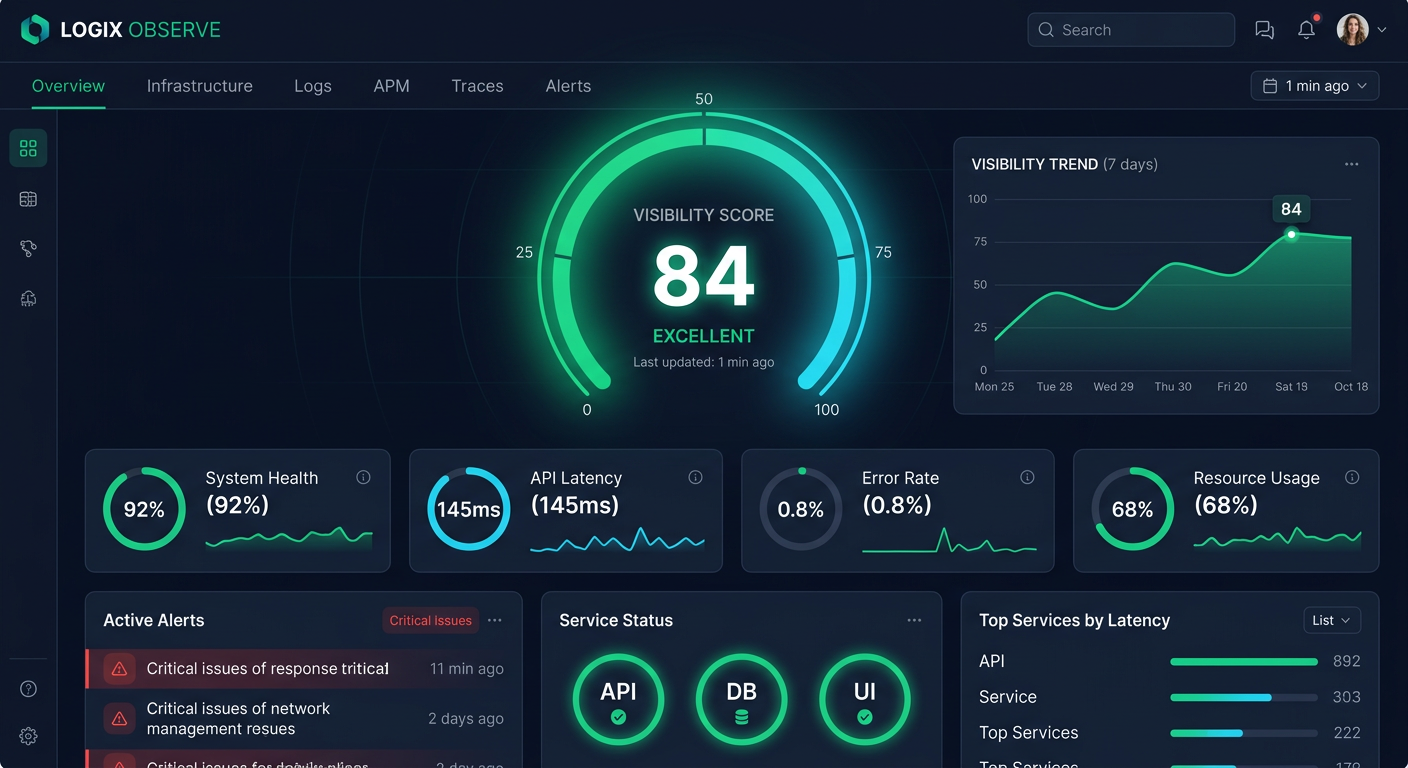
- What is your current Visibility Score? PromptEden's Visibility Score combines Presence, Prominence, Ranking, and Recommendation into a single 0-100 metric. Record it as your starting point.
- Which competitor domains appear in AI responses for your target queries? Organic Brand Detection surfaces these automatically.
Track Changes on Two Timelines
Short-term (2-4 weeks): Search-connected models like Perplexity and Google AI Overviews re-crawl content frequently. Changes to structured data, author bios, and on-page content can affect citation behavior within weeks. Monitor citation rates for the specific pages you updated.
Long-term (several months): Training-data-dependent models like Claude update on longer cycles. Brand mention accumulation, third-party coverage, and domain authority improvements take months to influence these models. Track Visibility Score trends over quarters, not days.
What to Measure
Focus on these specific metrics:
- Citation frequency by page. Are pages where you added E-E-A-T signals being cited more often? Citation Intelligence aggregates citation counts per domain over time, so you can isolate the impact of specific page-level changes.
- Platform variance. E-E-A-T improvements may affect search-connected models faster than API models. Tracking by platform reveals where your signals are having the most immediate effect.
- Competitor comparison. Is your share of voice increasing relative to competitors for the same queries? If competitors maintain stronger E-E-A-T signals on the same topics, your improvements may not produce visible gains until you close the gap.
What Transfers From SEO to AEO
Several SEO practices translate without modification: quality content creation, technical site health, high-authority backlinks from relevant domains, and regular content updates. These benefit both traditional rankings and AI citation.
What Changes for AI
Three significant shifts require new thinking:
From rankings to citations. In traditional SEO, success means ranking on page one. In AEO, success means being cited as a source in AI-generated responses. A page can rank #8 and still earn more AI citations than a page at #1 if it has stronger authority signals. Optimize for citation worthiness, not just ranking position.
From backlinks to brand mentions. The Ahrefs study of 75,000 brands showed brand web mentions correlate with AI visibility three times more strongly than backlinks (0.664 vs. 0.218). This does not mean you should stop building links. It means you should also invest in earning mentions in contexts where no link is provided: podcast transcripts, video discussions, forum conversations, and editorial references.
From page-level to entity-level optimization. Traditional SEO optimizes individual pages. AI visibility depends more heavily on entity-level signals: how AI models understand your brand as a whole. Consistent brand descriptions, Organization schema, cross-platform presence, and a coherent content strategy across your domain all contribute to entity-level authority that individual page optimization cannot achieve alone.
The E-E-A-T Improvement Cycle
Treat E-E-A-T building as an ongoing cycle, not a one-time project:
- Audit your current E-E-A-T signals across all four components.
- Prioritize the weakest area. If you have strong expertise but weak third-party mentions, focus authority-building efforts there.
- Implement specific changes: add author bios, publish original research, earn editorial mentions, implement structured data.
- Measure impact using the metrics above over the appropriate timeline.
- Iterate based on what the data shows.
The goal is not to "have" E-E-A-T. It is to build a measurable, compounding pattern of authority signals that AI models consistently recognize and reward with citations. Start by auditing your content for AI-citable structure and monitoring your visibility across the platforms that matter to your audience.