

AI Search vs Google Search: How They Actually Differ
AI search uses large language models to synthesize answers from multiple sources into a single narrative response. Google search returns a ranked list of links. This comparison breaks down how each approach handles queries, citations, and clicks, and explains what the shift means for content teams and SEO strategy.

What AI Search Actually Does
AI search vs Google search comes down to one core difference: AI search generates an answer, while Google search returns a list of pages.
When you ask ChatGPT, Perplexity, or Google's AI Overviews a question, a large language model reads through multiple web sources and produces a single written response. It pulls facts, combines perspectives, and delivers a synthesized answer right in the interface. You get a paragraph or two instead of ten blue links.
Google's traditional search works differently. It crawls billions of web pages, indexes their content, and ranks them by relevance signals like backlinks, page quality, and keyword matches. The output is a list of URLs sorted by predicted usefulness. You browse, click, read, and piece together the answer yourself.
This distinction matters because the two systems reward different types of content. Google rewards pages that match a query and earn links. AI search rewards content that is clear, specific, and quotable enough for a language model to extract and cite.
Key Differences Between AI Search and Google Search
The comparison between AI search and Google search goes beyond answer format. The entire experience, from how queries are processed to how results get used, works differently.
How results are presented
Google gives you a search results page with organic links, ads, featured snippets, and sometimes an AI Overview panel. AI search tools like ChatGPT and Perplexity give you a single conversational answer with source citations listed alongside or below the text.
How follow-up questions work
With Google, each new query starts from scratch. AI search keeps conversational context, so you can ask "what about pricing?" after an initial product question without restating the full topic.
How ads fit in
Google's business model depends on search ads mixed into results. Most AI search tools currently operate without ads in answers, though this is starting to change as platforms explore monetization.
How sources are treated
Google links to sources by ranking them. Each result is a discrete page the user can visit. AI search synthesizes content from typically multiple to multiple sources into a blended answer, attributing some claims through inline citations or a source list. The sources themselves may not receive a click.
How each handles ambiguity
Google handles ambiguous queries by showing diverse result types and letting you refine your search. AI search attempts to resolve ambiguity by asking clarifying questions or making a best guess at your intent.
Here is a side-by-side comparison of the most important differences:
Comparison Table
- Result format: Google shows ranked links. AI search shows a synthesized narrative answer.
- Sourcing method: Google indexes and ranks individual pages. AI search pulls from multiple sources and merges them.
- Click behavior: Google sends users to websites. AI search often answers the query directly, reducing outbound clicks.
- Follow-up context: Google treats each query independently. AI search maintains conversation history.
- Ad presence: Google includes paid ads in results. Most AI search tools currently show no ads.
- Optimization approach: Google rewards link-building and on-page SEO. AI search rewards citable, well-structured content.
- Best for: Google works best for navigational queries and product browsing. AI search works best for informational questions and research.
Where Google Still Wins
Google remains stronger for several query types. Navigational searches like "Amazon login" or "YouTube" work better with direct links. Local search with maps, reviews, and business hours is still Google's territory. Shopping queries where users want to compare prices, read reviews, and browse options also favor Google's visual format.
Real-time event information, live sports scores, and breaking news still rely on Google's indexing speed and infrastructure. When you need to see multiple perspectives on a controversial topic, Google's list format lets you decide which sources to trust.
Where AI Search Wins
AI search outperforms traditional search for complex informational queries that normally require reading multiple pages. Questions like "explain the difference between term and whole life insurance for a multiple-year-old" get better treatment from AI because the answer draws on several sources to create something tailored to the specific context.
Research and synthesis tasks are also stronger in AI search. If you need a comparison of five project management tools with specific criteria, AI search can produce a structured summary in seconds rather than requiring you to open five separate review pages.
Technical troubleshooting, multi-step how-to explanations, and "help me understand this concept" queries all favor AI search's ability to contextualize and explain.
How AI Search Chooses Which Sources to Cite
This is where most comparison articles stop short, and where the real strategic implications begin.
When ChatGPT, Perplexity, or Claude answers a question, they don't just pick the top-ranking Google result. Each platform has its own retrieval approach, but the general pattern is similar: the model identifies relevant sources, evaluates their authority and specificity, and weaves the strongest claims into its response.
Not every source that contributes to an answer gets a visible citation. AI platforms tend to cite sources that provide specific, verifiable facts rather than general overviews. A page that states "Visibility Score improved from multiple to multiple after implementing structured data" is more citable than one that says "SEO helps improve your online presence."
The citation patterns differ across platforms too. Perplexity shows numbered inline citations for nearly every claim. ChatGPT Search provides a source list and sometimes inline links. Google AI Overviews link to source pages in a card format below the generated text. Claude provides citations when browsing the web but relies on training data for general knowledge questions.
For content creators, this means the old approach of "rank on Google, get traffic" now has a parallel path: "get cited by AI, capture authority." A page can receive zero direct traffic from an AI platform but still influence purchase decisions through brand mentions and recommendations embedded in AI answers.
Understanding which sources AI models favor for your industry, and tracking whether your content gets cited, has become a measurable part of search strategy. Tools like PromptEden's Citation Intelligence let you see exactly which domains AI models cite when answering questions about your brand and competitors.
What Zero-Click AI Search Means for Content Strategy
Zero-click search is not new. Google's featured snippets, knowledge panels, and instant answers have been reducing click-through rates for years. According to SparkToro's 2024 analysis, 58.5% of US Google searches already ended without a click to any external website.
AI search accelerates this pattern. When an AI platform answers a query completely within its interface, the user has no reason to visit the original source. Searches that trigger Google's AI Overviews show an average zero-click rate of 83%, compared to roughly 60% for traditional results without AI Overviews.
For content teams, this creates a split strategy challenge. You need content that ranks well in traditional Google results for navigational and transactional queries. You also need content that AI platforms will cite and reference for informational queries.
The good news: the same qualities that make content citable by AI also tend to improve traditional SEO performance. Clear structure, specific claims with data, authoritative tone, and direct answers to questions work well in both systems.
Here are the practical adjustments that matter most:
- Lead with direct answers. Put the core answer in the first two sentences of each section. AI models extract opening statements more reliably than buried conclusions.
- Use specific numbers with attribution. "Brand mentions increased 34% over Q3" is more citable than "performance improved significantly." Always tie numbers to a source.
- Structure for extraction. Use descriptive headings that match how people ask questions. Break complex topics into clear subsections. Use bullet points for lists of features or steps.
- Keep content current. AI models favor recently updated content. Include dates in your data points and review articles quarterly.
- Build topical authority. Create clusters of content around your core topics. AI models are more likely to cite sources they encounter repeatedly across related queries.
Evidence and Benchmarks: AI Search Adoption Data
The shift toward AI search is measurable, even though Google still dominates overall search volume.
According to a study by Eight Oh Two, 37% of consumers now begin their searches with AI tools rather than traditional search engines. That same study found that 47% of consumers say AI influences which brands they trust, and 85% still cross-reference AI answers with traditional search results before making decisions.
Google continues to process billions of searches daily, with estimates ranging from 8.5 billion to over 13 billion depending on the source and methodology. Its global search market share sits around 89-90% according to StatCounter's 2025 data. But raw market share doesn't capture how user behavior within search is changing.
The growth of zero-click behavior tells a fuller story. Zero-click rates have climbed from roughly 50% in 2020 to an estimated 58-65% by 2025, depending on the study. When AI Overviews appear, the click-through rate for the top organic result drops by about 58%.
These numbers suggest that even though Google processes the vast majority of search queries, an increasing share of those queries resolve without sending traffic to external websites. For brands, visibility within AI-generated answers is becoming as important as ranking on page one.
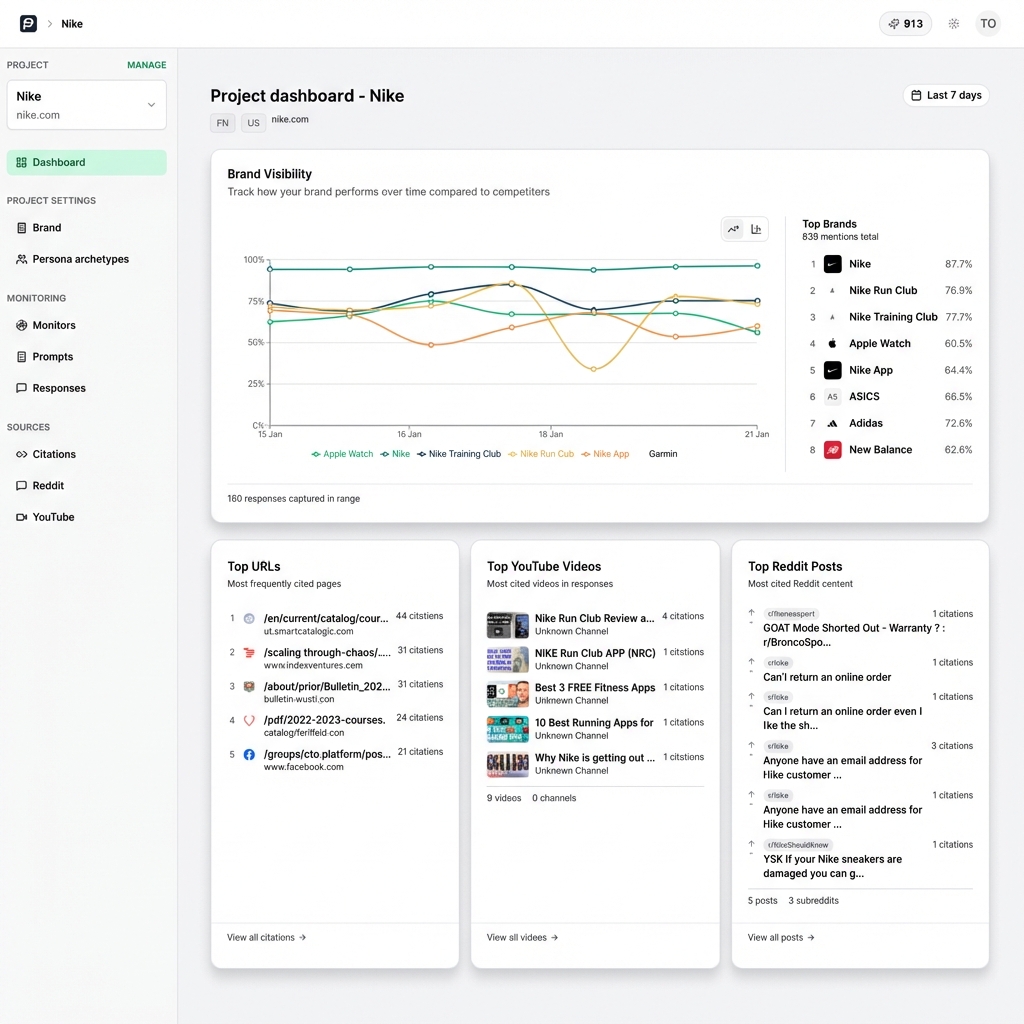
Tracking this shift requires monitoring both traditional rankings and AI platform mentions. PromptEden monitors brand visibility across multiple AI platforms spanning search, API, and agent categories, giving teams a clear picture of where their brand appears in AI-generated responses.
What the Data Means for SEO Teams
SEO teams should treat AI search visibility as a parallel metric, not a replacement for traditional search performance. The 85% cross-referencing rate shows that most users still verify AI answers through Google. That means both channels matter.
The practical takeaway: optimize for Google rankings and AI citability simultaneously. Content that provides direct, well-structured answers with specific data points performs well in both environments. Track your Visibility Score across AI platforms alongside your traditional keyword rankings to get the full picture.
How to Monitor Your Brand Across Both Search Systems
Running separate strategies for Google search and AI search creates overhead that most teams can't sustain. The more effective approach is to build content that performs in both systems and use monitoring tools to measure results across channels.
For traditional Google search, standard SEO tools handle keyword tracking, ranking positions, and click-through rates. For AI search visibility, you need a different measurement layer.
PromptEden's Visibility Score quantifies your brand's AI presence on a 0-100 scale using four components: Presence (does AI mention your brand at all?), Prominence (how featured is your brand in the response?), Ranking (where does your brand appear in lists?), and Recommendation (does AI actively recommend your brand?).
Pair this with Citation Intelligence to see which source domains AI models rely on when answering questions in your space. If a competitor's blog keeps getting cited but yours doesn't, that tells you exactly where to focus your content improvements.
The goal is not to choose between Google optimization and AI optimization. Both systems increasingly share the same search queries. Your content strategy should serve readers wherever they find your brand, whether that is through a Google result, an AI-generated answer, or a recommendation from an autonomous agent.