

AI Brand Monitoring Tools: What to Look For
AI brand monitoring tools help you see how ChatGPT, Claude, Perplexity, and Gemini talk about your brand in their generated responses. This guide covers the six features that matter most when evaluating these tools and how to pick the right platform for your team.

What AI Brand Monitoring Tools Actually Do
AI brand monitoring tools track how AI assistants like ChatGPT, Claude, Perplexity, and Gemini mention, describe, and recommend your brand in their generated responses. They work by sending prompts to multiple AI platforms on a schedule, collecting the responses, and analyzing them for brand mentions, positioning, and sentiment.
This is different from web analytics or social listening. When someone asks ChatGPT "What's the best project management tool?", the answer is generated in real time from the model's training data and any sources it retrieves. That response isn't a web page you can crawl or a social post you can scrape. It exists only in the conversation between the user and the AI, and it vanishes once the session ends.
The scale of these platforms makes the blind spot hard to ignore. According to TechCrunch, ChatGPT reached 900 million weekly active users in February 2026. Perplexity has grown to over 45 million monthly active users, according to DemandSage. Google AI Overviews now appear across a growing share of search results. These platforms are shaping how millions of people discover and evaluate brands, and that influence happens entirely outside the reach of traditional monitoring.
AI brand monitoring tools close that gap by giving you visibility into a channel that traditional tools can't access: the AI-generated answer.
Why Traditional Monitoring Misses AI Mentions
Traditional brand monitoring was built for a world of published content. Tools like Brandwatch, Mention, and Sprout Social excel at scanning web pages, social media posts, news articles, and forum threads. They follow links, index text, and surface mentions based on keyword matching.
AI-generated responses don't work that way. When Perplexity answers a question about your industry, that answer is assembled on the fly from retrieved sources and the model's own knowledge. It's shown to the user and then it's gone. There's no permalink, no RSS feed, no public HTML to crawl.
That means traditional monitoring tools miss every AI-generated brand mention. They have no mechanism to observe what AI platforms say about you, because those answers don't live on the open web. A tool designed to crawl websites can't read a ChatGPT conversation any more than it can read a phone call.
The problem gets worse when you consider how AI recommendations influence buying decisions. When a potential customer asks an AI assistant for product recommendations and your competitor appears but you don't, you've lost that opportunity before it ever reached your website. Without a tool specifically watching AI responses, you'd never even know it happened.
Six Features to Look for in an AI Brand Monitoring Tool
Not all AI monitoring tools are built the same. Some cover a single platform while others track many. The features that separate useful tools from limited ones come down to six areas, and each one affects how much practical value you get from the tool.
Use this capability checklist when shortlisting vendors. Each row is a feature, what it actually measures, the minimum-viable bar for a serious tool, and what PromptEden delivers today. A tool that misses two or more of these rows will leave you with blind spots that take months to discover.
| Feature | What it measures | Minimum viable | What PromptEden delivers |
|---|---|---|---|
| Multi-platform coverage | Number of AI surfaces queried for each prompt | 3+ platforms (ChatGPT, Claude, Perplexity) | 5 AI surfaces (ChatGPT, Claude, Gemini, Google AI Overviews, Google AI Mode) |
| Visibility scoring | Composite metric covering presence, prominence, ranking, and recommendation | Mention-vs-no-mention flag | Four-dimension Visibility Score on a 0–100 composite scale |
| Citation intelligence | Which URLs and domains AI cites for brand-adjacent answers | Cited-domain export | Per-prompt citation frequency with source-quality scoring and CSV export |
| Competitor detection | Automatic brand extraction from AI responses | Manual competitor list | Organic brand discovery plus share-of-voice tracking against discovered brands |
| Prompt-level tracking | Per-prompt history of brand position over time | Aggregate brand mention counts | Per-prompt scheduling, per-response history, and change alerts |
| Refresh cadence | How often the tool re-runs each prompt against AI platforms | Weekly |
Multi-Platform Coverage
The more AI platforms a tool monitors, the more complete your picture. At minimum, look for coverage of ChatGPT, Perplexity, Google AI Overviews, Gemini, and Claude. Some tools also track Google AI Mode, autonomous coding agents like GitHub Copilot and Codex, and API-level models.
PromptEden monitors multiple AI platforms across three categories: search (ChatGPT, Perplexity, Google AI Overviews, Google AI Mode, Gemini), API (Claude), and agent (Claude Code, Codex, GitHub Copilot). That three-category approach matters because different platform types surface your brand in different contexts. A search query about "best CRM software" triggers different AI behavior than a coding agent evaluating which library to install, and you want visibility into both.
Visibility Scoring
Raw mention counts don't tell you much on their own. A response that buries your brand at the bottom of a long list is different from one that leads with your name as the top recommendation. You need a scoring system that captures that distinction.
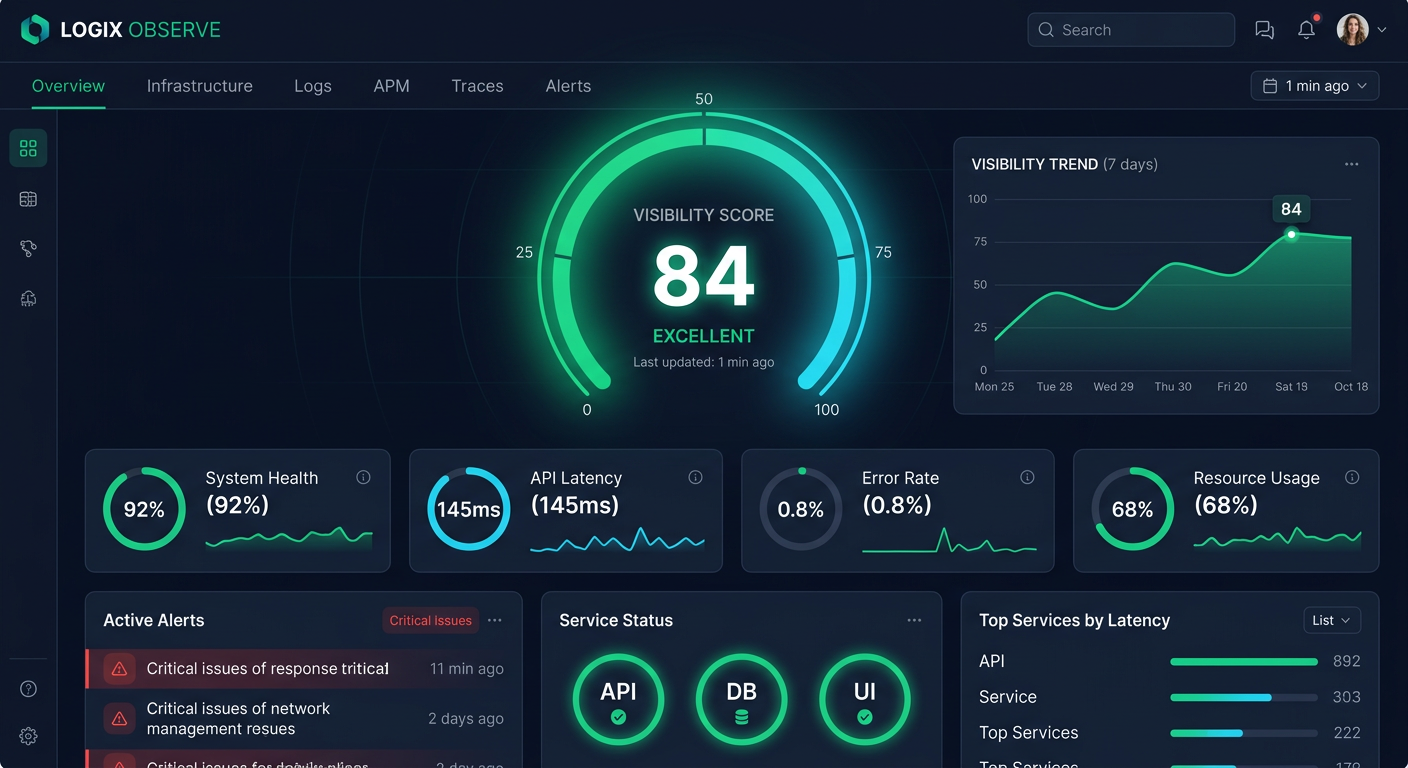
Look for tools that measure visibility across multiple dimensions. PromptEden's Visibility Score evaluates four components: Presence (does the AI mention your brand at all?), Prominence (how featured is your brand in the response?), Ranking (where does your brand appear in lists?), and Recommendation (does the AI actively recommend you?). A composite score gives you a single metric to track over time, while the individual components show you where to focus your optimization.
Citation Intelligence
AI models don't generate answers from nothing. Many of them pull from specific web sources, and the sources they cite directly influence their recommendations. Citation intelligence shows you which URLs and domains AI models reference when talking about your brand or your competitors.
This matters for optimization. If you know that a particular review site is being cited by Perplexity when it recommends your competitor, you can work to get your brand represented on that same source. Tools with citation tracking let you see cited domains, track citation counts over time, and export the data for deeper analysis. Without this visibility, you're guessing at which content sources actually drive AI recommendations.
Competitor Detection
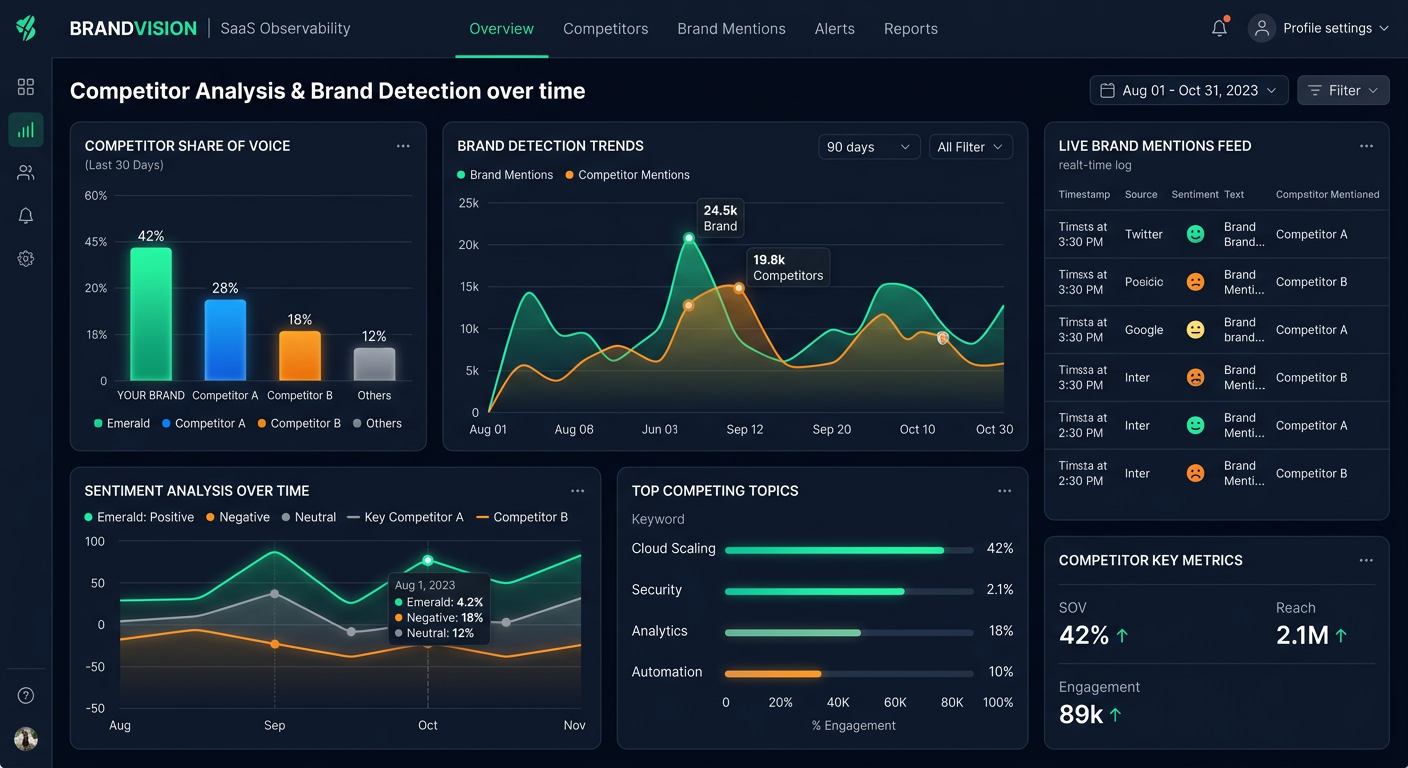
You need to know who else shows up when AI answers questions about your category. The best monitoring tools automatically extract brand entities from AI responses and track share of voice across those discovered brands.
Rather than manually entering competitor names, look for organic brand detection that discovers competitors directly from AI responses. This approach often surfaces brands you weren't tracking, including smaller players or adjacent products that AI models mention alongside yours. In practice, the brands that AI recommends don't always match the competitors you'd expect from traditional search results, so automatic detection keeps your competitive view accurate without constant manual updates.
Prompt-Level Tracking
Generic monitoring tells you that your brand appeared somewhere in AI responses. Prompt-level tracking tells you exactly which queries produce mentions of your brand and which don't.
This is the most useful feature for marketing teams. You define the specific prompts that matter to your business ("best [category] tool for [use case]") and the tool monitors AI responses to those prompts on a schedule. When a response changes and your brand drops out, or when a competitor gains position, you catch it early. Some tools also suggest relevant prompts based on your brand context, which helps you discover monitoring gaps you hadn't considered.
Refresh Cadence and Data Freshness
AI models update their behavior frequently. A tool that checks responses once a week will miss short-lived changes in how models talk about your brand. Look for daily monitoring at minimum, with higher-frequency options available for competitive categories.
Refresh cadence also affects how quickly you can respond to problems. If your brand suddenly disappears from ChatGPT's recommendations for a high-value query, you want to know within days, not weeks. Daily monitoring lets you catch problems within a day or two instead of discovering them a week later.
How AI Brand Monitoring Compares to Social Listening
AI brand monitoring and social listening solve different problems, and confusing the two leads to blind spots in your brand intelligence.
| Dimension | Social listening | AI brand monitoring |
|---|---|---|
| What it tracks | Published content: tweets, reviews, news, forum posts, blog mentions | Generated content: live AI responses to user prompts |
| How it works | Crawls and indexes existing public web pages | Sends prompts to AI platforms and analyzes the responses |
| Where the data lives | Public web (durable, addressable, linkable) | Ephemeral AI sessions (no permalink, no RSS) |
| Primary signal | Volume + sentiment of human-authored mentions | Brand presence, prominence, and recommendation in AI answers |
| Best for | Crisis detection, PR monitoring, customer sentiment | Buyer-journey intelligence, recommendation tracking, AI SEO |
| Tools | Brandwatch, Mention, Sprout Social | PromptEden, Otterly, Profound, Peec, Nightwatch |
Social listening tools track published content and are built for sentiment analysis across public conversations and crisis detection based on volume spikes. If someone complains about your product on X or praises it in a Reddit thread, social listening catches that. AI brand monitoring tracks the answers that ChatGPT, Perplexity, Claude, and other AI assistants produce for user questions in real time — responses that are assembled from training data and retrieved sources, shown to the user, and then gone.
For most brands, you need both. Social listening tells you what people are saying about you. AI brand monitoring tells you what AI is saying about you. As more consumers turn to AI assistants for product research and recommendations, the second channel becomes just as important as the first.
Questions to Ask Before Choosing a Tool
Before committing to a platform, work through these evaluation questions:
Which AI platforms does it cover? Count the platforms and check whether they include the ones your audience actually uses. If your buyers rely on Perplexity for research, make sure the tool monitors Perplexity specifically, not just ChatGPT.
How does it measure visibility? Ask whether the tool provides a composite score or just raw mention counts. A scoring methodology that separates presence, prominence, and recommendation gives you more useful data than a simple yes-or-no mention check.
Can you track specific prompts? Generic brand monitoring is a start, but prompt-level tracking is where you get the clearest picture. Make sure you can define custom queries and monitor them over time.
What's the refresh frequency? Daily monitoring is the baseline for most teams. If you're in a competitive category where AI recommendations shift quickly, look for tools with more frequent checks.
Does it detect competitors automatically? Manually adding competitors covers the known players, but organic detection catches the brands you didn't expect to find in AI responses. That's often where the most unexpected findings show up.
What does pricing look like at scale? Most tools charge based on the number of prompts, platforms, or brands you monitor. Model out what your usage looks like at full deployment, not just during a trial period.
That's enough to test whether AI brand monitoring turns up useful data for your team before committing to a paid tier.
Getting Started with AI Brand Monitoring
If you're new to AI brand monitoring, start with three steps.
Define your monitoring prompts. Write multiple-multiple questions that your ideal customers might ask an AI assistant about your category. Include direct brand queries ("What do you think of [your brand]?"), category queries ("Best [category] tools for [use case]"), and comparison queries ("[your brand] vs [competitor]"). PromptEden's guide on how AI prompts affect brand visibility can help you brainstorm relevant prompts if you're not sure where to start.
Run a baseline check. Test those prompts across multiple AI platforms and document where your brand appears, where it doesn't, and how competitors show up. This baseline gives you a clear reference point for measuring progress over time.
Set up ongoing monitoring. Once you have a baseline, configure scheduled tracking for your priority prompts. Focus on the queries with the highest business impact first, like prompts related to purchase decisions or vendor evaluations in your category.
From there, review your data weekly. Look for trends in your Visibility Score, track which competitors gain or lose ground, and use citation data to identify the sources AI models rely on when discussing your space. The goal is to turn AI brand monitoring from a one-time check into a continuous part of your brand intelligence workflow.