

How to Implement AEO for Financial Services
Answer Engine Optimization (AEO) for financial services involves optimizing content with high E-E-A-T signals to ensure AI models confidently recommend financial products. As artificial intelligence changes how consumers research financial decisions, banks and fintech companies must adapt their search strategies. This guide explains how to build AI visibility while maintaining regulatory compliance.

What is Answer Engine Optimization for Finance?: aeo financial services
Answer Engine Optimization (AEO) improves how often AI assistants mention and recommend your brand in generated answers. For financial services, this means formatting content with clear E-E-A-T signals so models can confidently suggest your products.
Language models treat financial queries with caution because they fall under the "Your Money or Your Life" category. When a user asks an AI tool for advice on retirement accounts or small business loans, the algorithm prioritizes authoritative, structured data over keyword relevance. Traditional search optimization focused on ranking a webpage in a list of blue links. AEO focuses on providing factual statements a language model can extract and cite as the correct answer.
Financial AEO requires a specialized approach. A consumer evaluating a new checking account might ask a generative engine to compare fee structures across three different banks. If your content is vague or hidden behind complex marketing copy, the model will struggle to extract the facts. It will bypass your institution for a competitor with clearer documentation. To win the recommendation, you must structure your content so a machine can verify its accuracy and pass that information to the user.
The shift from traditional search to generative answers changes how people research products. Users no longer want to click through five different websites to build their own comparison table. They want the AI to do the work for them. Your marketing strategy must evolve to serve the AI model first, treating it as the primary gateway to your future clients.
Helpful references: PromptEden Workspaces, PromptEden Collaboration, and PromptEden AI.
The Growing Impact of AI on Financial Research
Consumers increasingly turn to conversational interfaces to explain complex topics. According to Pew Research Center, 23 percent of all U.S. adults say they have used ChatGPT, and adoption for complex research continues to grow. Financial research often involves comparing multiple options, understanding tax implications, or deciphering fee structures. AI tools excel at synthesizing these details into readable summaries.
If your financial institution does not appear in these generated summaries, you lose access to high-intent prospective clients. A lack of AI visibility means buyers never shortlist your products during their initial discovery phase. Competitors who structure their content for AI extraction will capture that early stage demand. The challenge is not just appearing in the answer. You must ensure the AI describes your services accurately and links back to your domain as a primary citation source.
Consider a user searching for the best high-yield savings accounts. In a traditional search, they might see your ad at the top of the page. In an AI-driven search, the engine evaluates the broader web consensus and generates a definitive list. If the model does not consider your domain an authoritative source on savings yields, no amount of advertising spend will force your inclusion in that organic summary. You must earn the recommendation through citable, structured facts.
This dynamic makes AEO an important strategy for financial growth. AI models act as a new kind of intermediary. They filter out noise and present only the most credible options. Building a strategy to ensure these models understand and favor your financial products is no longer optional. It is a requirement for maintaining market share.
Managing Compliance in AI Search
Most marketing teams approach AI visibility with standard content strategies, but many ignore the compliance aspect of AI visibility for finance. You cannot publish broad financial advice and expect models to cite you safely. Regulatory requirements dictate that financial claims include proper disclosures and clear terms.
AI models often struggle with detailed disclosures if they are buried in legal footnotes or separated from the primary text. To improve your chances of safe extraction, integrate your compliance statements directly into the main text flow. If you state an interest rate or a fee schedule, place the limiting conditions in the immediate next sentence. When you bundle the claim and the disclosure into a single paragraph, the AI is more likely to extract the complete thought. This reduces the risk that an AI model will misrepresent your product features and creates a more trustworthy citation.
Generative engines prioritize safety in financial contexts. They are programmed to avoid making definitive financial recommendations that could lead to consumer harm. By writing content that explicitly states the boundaries of your advice, you align with the model's safety parameters. Use phrases that clarify who a product is for and what the associated risks might be. This transparency signals to the algorithm that your content is a responsible source to quote.
You must ensure your published numbers remain accurate across all platforms. An AI might pull data from a third-party aggregator rather than your main site. Maintaining consistency across directories, press releases, and partner sites is essential. Discrepancies in your stated rates or terms can cause the model to lower your trust score and exclude your brand.
The E-E-A-T Imperative for AI Models
Search engines apply strict scrutiny to financial advice. You must prove Experience, Expertise, Authoritativeness, and Trustworthiness to become a cited source. Language models look for recognizable signals of authority to reduce their own risk of generating harmful financial guidance.
To demonstrate expertise, every piece of content should have a clear byline linked to a detailed author biography. This biography should list professional designations, years of experience, and regulatory identifiers. When an AI crawler associates your content with a verified expert, it weighs the information more heavily. Anonymous or vaguely attributed financial articles rarely achieve citation in generative summaries.
You must also build external trust signals. AI platforms rely on third-party citations to verify claims. Getting your experts quoted in major financial publications provides the external validation that language models need. The more often authoritative external domains mention your financial institution, the more confidently an AI model will recommend your services. This requires a coordinated public relations strategy focused on digital mentions rather than print circulation alone.
Trustworthiness involves technical security and site health. A slow website with poor security protocols signals low quality to search crawlers. Ensure your infrastructure meets modern standards. When a language model cross-references its training data with live web results, a technically sound website reinforces the validity of your financial content.
How to Optimize Content for AI Recommendation
Improving your AI visibility requires a shift from keyword density to structural clarity. Here are the highest-impact actions you can take to format your content for extraction.
Start with Direct Answers The first paragraph of any informational page should contain a concise, two-sentence answer to the primary user question. AI engines look for these factual statements to populate their summaries. Do not bury the main point under paragraphs of introduction. State the answer , then use the rest of the page to provide deeper context.
Implement Precise Schema Markup FinancialService structured data tells AI models what you do in a machine-readable format. You should include specific fields for service types, fee structures, and the areas you serve. This explicit data structure removes ambiguity for automated crawlers. When the model can parse your offerings via JSON-LD, it does not have to guess about your capabilities.
Build Comparison Content Objectively AI models often synthesize comparison answers. Create pages that directly compare product categories or provide objective market evaluations. When you provide the structural framework for a comparison, the AI is more likely to use your specific criteria when it generates an answer for a user. Be fair in these comparisons to maintain credibility.
Maintain an AI-Readable Glossary Financial jargon confuses both users and algorithms. Build a dedicated glossary section that defines industry terms in plain language. Link these definitions throughout your main content. This practice helps language models map the relationships between financial concepts and your specific products.
The Role of Technical Architecture in AEO
Content structure alone is not enough to secure AI recommendations. The underlying technical architecture of your website plays a major role in how language models ingest your information. If a crawler cannot efficiently parse your site, your best financial content will remain invisible to generative engines.
Your site hierarchy should group related financial topics into clear silos. A dedicated subfolder for retirement planning, distinct from corporate banking services, helps models understand topical authority. This organized structure allows crawlers to build semantic maps of your expertise. When an AI tool needs to answer a specific query about small business loans, a logically structured site provides a stronger signal of relevance than a flat architecture.
Speed and accessibility matter. AI crawlers operate with strict resource limits. If your pages load slowly or rely on client-side rendering without proper server-side fallbacks, the bots may time out before reading your core claims. Ensure your text content is available in the initial HTML payload. Financial calculators and interactive tools should have static text summaries accompanying them, so the AI can understand the tool's purpose even if it cannot execute the JavaScript.
Many financial brands are adopting dedicated text files for AI crawlers. An llms.txt file placed in your root directory provides a clean, markdown-based summary of your core services. This file bypasses visual formatting, offering pure data for ingestion. By providing this specialized endpoint, you help models receive your accurate product descriptions and compliance statements without getting stuck on complex navigation.
Common Pitfalls in Financial AI Optimization
As financial institutions adapt to generative search, several common mistakes derail their optimization efforts. Understanding these pitfalls will save your team months of wasted effort.
The most frequent error is using vague, marketing-heavy language. Phrases like "industry-leading rates" or "premium service" offer no verifiable data for an AI model to extract. Language models prefer concrete numbers and definitive policies. Replace subjective claims with objective facts, such as "a 4.25 percent annual percentage yield" or "no monthly maintenance fees." These specific data points are what AI summaries require.
Another common mistake is hiding essential disclosures. Some teams try to improve readability by moving terms and conditions to a separate legal page. While this might look cleaner to a human reader, it breaks the connection for an AI crawler. If the model extracts your rate but misses the accompanying disclosure, it may generate a non-compliant answer. This increases the likelihood that the engine will deprecate your domain as an unsafe source. Keep the claim and the condition tightly bound in the same paragraph.
Many brands also ignore the importance of off-page signals. You cannot optimize your website and expect to dominate AI recommendations if no one else is talking about you. Language models cross-reference your claims against the broader web consensus. If third-party financial review sites or news outlets do not corroborate your expertise, your internal optimization will have limited impact. A successful AEO strategy must include active digital public relations to build an external footprint.
Measuring Share of Voice in Financial AI Search
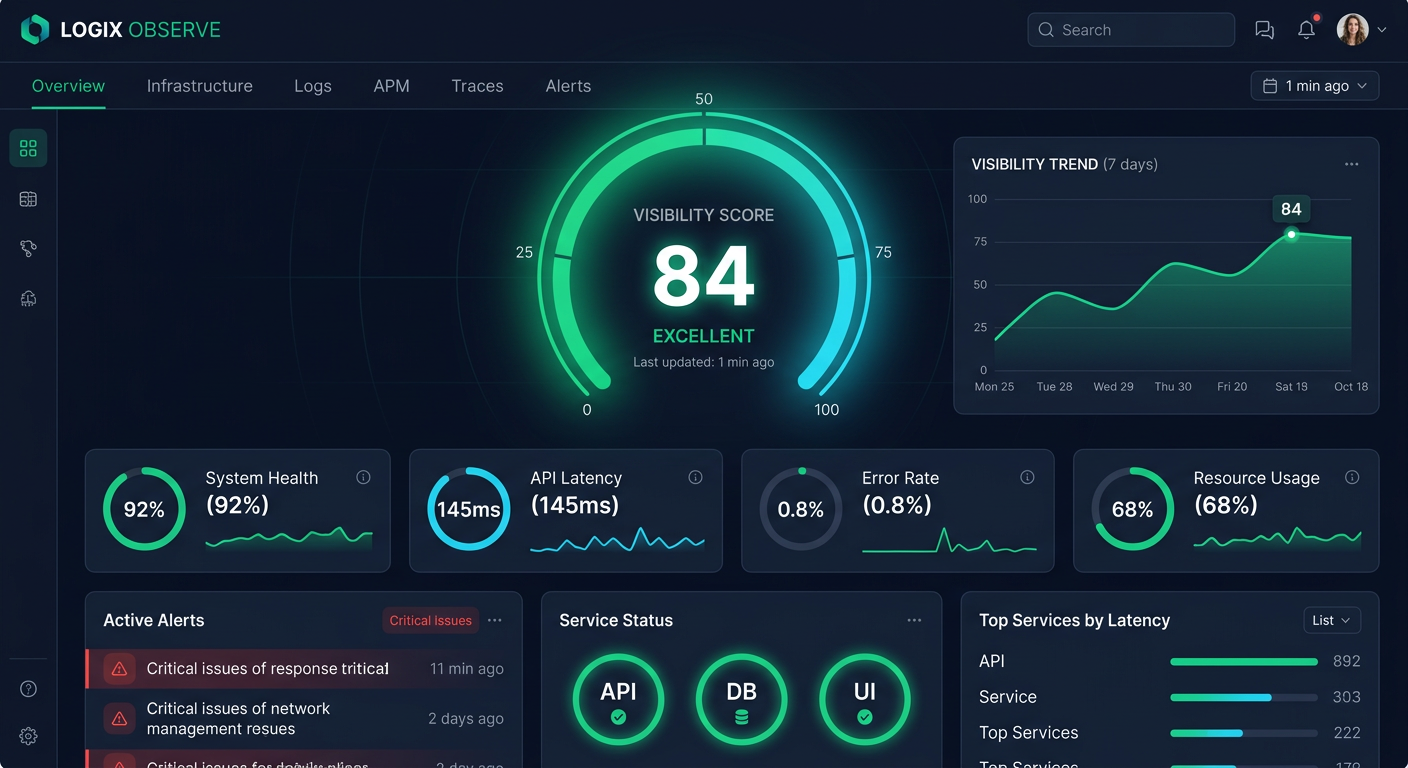
You cannot improve your AI visibility if you do not measure it. Traditional click-through rates are becoming less relevant in an environment where the AI provides the complete answer directly on the results page. You need to track new metrics that reflect this shift in user behavior.
PromptEden monitors brand visibility across five AI surfaces: chat assistants and Google search. This multi-platform approach allows you to track your true share of voice. You should monitor your inclusion rate, which measures how often your brand is cited in AI-generated answers for your target queries. You also need to track citation intelligence to see which specific sources models rely on when they mention your firm.
By setting up automated prompt tracking, you can monitor specific financial queries over time. This helps you catch shifts in AI recommendations early and adjust your content strategy before you lose market share. If a competitor launches a new product and the AI models begin favoring them, you need to know right away.
Effective measurement requires looking beyond your own domain. Organic Brand Detection tools can automatically discover which competing brands appear alongside yours in AI responses. Understanding this competitive context allows you to refine your positioning and highlight the specific differentiators that make your financial services superior.
The Future of AI Recommendations in Finance
The intersection of artificial intelligence and financial services will continue to evolve. As models become more advanced, they will shift from providing generic summaries to offering personalized financial insights. This transition will require brands to maintain higher standards of data accuracy and contextual relevance.
In the near future, generative engines may integrate directly with user financial data via secure APIs. When a user asks an AI to recommend a portfolio strategy based on their specific income and risk tolerance, the model will evaluate institutional offerings in real-time. Brands that have invested in structured data and clear AEO strategies today will be the ones capable of participating in these dynamic, personalized recommendations tomorrow.
Preparing for this future means treating your website not just as a marketing brochure, but as an active data node. Every product page, disclosure, and educational article must serve a dual purpose. It must inform the human reader and guide the AI model. By adopting this mindset now, your financial institution will secure a permanent place in the generative search landscape, ensuring steady growth in an automated world.