How to Track Legacy System Replacement Advice in AI
Monitoring legacy system replacement advice in AI helps enterprise vendors track when and how LLMs recommend their platforms to IT leaders looking to modernize outdated technology stacks. By understanding these digital transformation queries, you can align your content strategy to intercept buyers exactly when they ask AI for legacy alternatives.

The Shift in How IT Leaders Research Modernization: monitoring legacy system replacement advice
Answer Engine Optimization (AEO) is the practice of improving how often your brand is cited, mentioned, and recommended in AI-generated answers. Enterprise CIOs often ask AI engines for ways to phase out legacy monolithic applications. Instead of paging through static analyst reports or standard search results, technical buyers want generative AI to compare architectures. They need to weigh migration risks and find modern alternatives to aging infrastructure.
This shift creates a visibility problem for software vendors. A technology leader might ask an AI assistant to "Recommend cloud-native alternatives to our current on-premise ERP." The models then pull from training data and live search context to formulate an answer. If your platform is missing from these AI recommendation lists, you risk losing buyers during the earliest stages of their research.
Monitoring legacy system replacement advice in AI helps enterprise vendors track when and how LLMs recommend their platforms. This tracking reveals which competitors the AI positions as the safest migration paths while highlighting gaps in your own citation coverage. Marketing and product teams can use this data to improve their Answer Engine Optimization strategy, helping them appear as the default recommendation for legacy phase-outs.
AI responses change often because LLMs do not rely on static keyword rankings. They evaluate the semantic relationship between your product's capabilities and the pain points of older systems. Understanding this requires ongoing observation across multiple AI platforms.
Helpful references: Prompt Eden Workspaces, Prompt Eden Collaboration, and Prompt Eden AI.
How AI Models Formulate Legacy Replacement Recommendations
To influence AI recommendations, you first need to understand how models construct their answers about legacy system alternatives. Artificial intelligence handles complex modernization queries by combining foundational training data with real-time retrieval-augmented generation (RAG).
First, models analyze the context of the user's prompt to find indicators of technical debt. They look for scaling limitations and security issues. They also flag integration bottlenecks tied to older monolithic applications. The AI then searches for vendor solutions that address these historical problems.
Second, models prioritize citation authority. They surface vendors that appear alongside modernization frameworks in industry publications and technical docs. They also draw heavily from migration case studies. Vendors who map their content to legacy system deprecations see higher citation rates in modernization queries. Comparing your modern architecture to the shortcomings of the legacy tools your customers are abandoning gives the AI the semantic bridge it needs to recommend you.
LLMs also structure their advice to lower risk. Enterprise migrations carry high risk, so AI assistants favor platforms offering clear migration paths and transition tools. If your documentation lacks practical migration resources, the AI will likely recommend a competitor with a better-documented transition process.
Step-by-Step: Tracking Digital Transformation Queries in AI
Setting up a process to monitor these conversations ensures you never miss a shift in AI sentiment. Here is how to track digital transformation queries relevant to your industry.
1. Identify core legacy anchor terms Begin by cataloging the names and versions of the outdated systems your target accounts use. You should also note their core descriptions to form the baseline for your monitoring prompts.
2. Map the transformation intent Combine those anchor terms with migration-focused modifiers. Track prompts such as "How to migrate from [Legacy System] to cloud" or "Best modern alternatives to [Legacy System] for enterprise."
3. Monitor across multiple model families Avoid limiting your tracking to a single interface. Different models weigh training data and live citations in their own ways. You need to track your visibility across the broader AI ecosystem to get an accurate picture of your share of voice.
4. Analyze the citation sources When an AI recommends your platform or a competitor, look into which URLs it cites to justify that recommendation. This reveals the third-party publications and documentation pages driving the model's logic.
5. Measure recommendation frequency over time Track whether your brand's presence in these legacy replacement answers grows or shrinks week over week. Consistent tracking is the only way to validate your Answer Engine Optimization efforts.
Bridging the Content Gap for Modernization Use Cases
Many software vendors focus their content exclusively on their own features, ignoring the legacy systems their buyers want to escape. This creates a semantic gap. If you never mention the old way of doing things, AI models struggle to connect your solution to the buyer's historical problem.
To close this gap, your content strategy needs to address the transition. Create landing pages and technical blog posts detailing the migration process. Make sure your documentation also covers how to move away from well-known legacy monoliths. Use the terminology IT leaders use when expressing frustration with their current stack.
Format this content so LLMs can easily parse and quote it. Use "Before and After" comparison tables alongside step-by-step migration checklists. You should also outline the technical risks of remaining on the legacy system and provide evidence-based arguments for your architectural approach.
This strategy focuses on the enterprise modernization use-case, setting it apart from standard competitor tracking. Bridging the gap between the old and the new provides the semantic signals AI assistants need to recommend your platform as an upgrade path.
Measuring Success in AI Legacy Replacement Advice
Tracking your success in AI-driven digital transformation guides requires a shift from standard SEO metrics toward AI-specific KPIs.
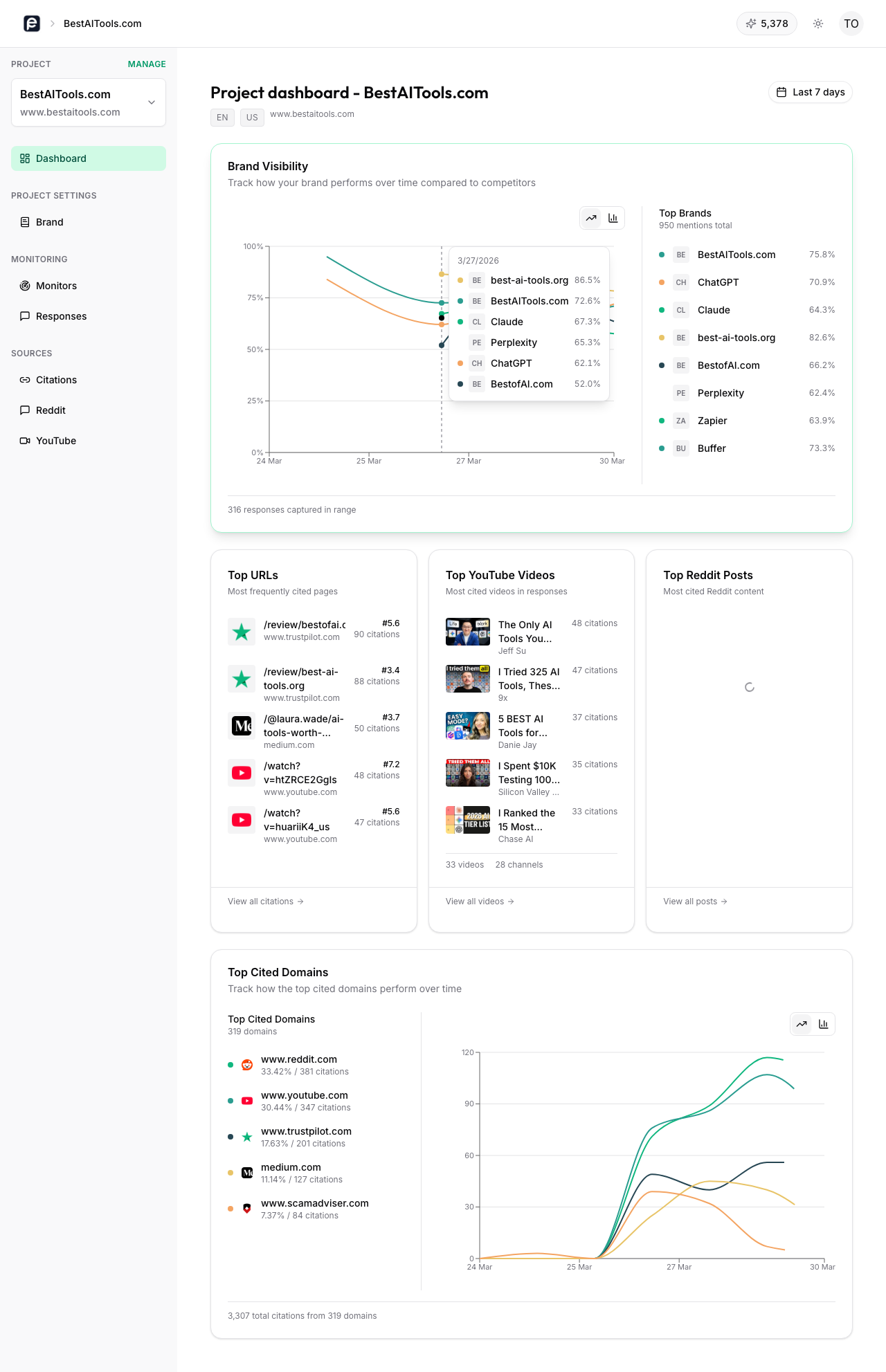
Begin by tracking your Visibility Score for legacy replacement prompts. This metric tracks your brand's presence and recommendation frequency across AI platforms. A rising Visibility Score in this cluster indicates your content strategy is influencing model behavior.
You should also monitor your Organic Brand Detection metrics. This helps you identify which competitors the AI associates with legacy migrations in your industry. You might discover the AI recommends a competitor you had not considered a threat just because their documentation offers better migration templates.
Make sure to look closely at Citation Intelligence. Knowing which case studies or technical articles the AI uses to justify its advice lets you produce more of that content. Refining your strategy based on these AI-native metrics helps you become a top recommendation for enterprise modernization.