

How to Track Competitors in AI Search Results
Your competitors are appearing in AI-generated answers, and most brands have no system for tracking it. Traditional competitive intelligence tools miss AI search entirely because they were built for Google rankings, not LLM responses. This guide walks through how to track competitors in AI search, measure share of voice, and turn findings into positioning wins.

Why You Need to Track Competitors in AI Search
Competitive intelligence in AI search means monitoring how AI platforms mention, rank, and recommend your competitors when users ask questions about your industry. This is fundamentally different from tracking traditional search rankings. In Google, you can see exactly who ranks for a keyword. In AI search, there are no fixed positions. Each response is generated fresh, and the competitors mentioned can change based on the prompt, the model, and even the time of day. ### What traditional tools miss
Most competitive intelligence tools were designed for a world of blue links. They track Google search rankings, paid ad positions, social media mentions, and news coverage. None of these tell you whether ChatGPT recommends your competitor when someone asks "What is the best project management tool?" or whether Claude lists a rival brand first when answering "Which CRM should I use for a small team?"
According to Gartner, organic search traffic to websites is expected to decrease 25% by 2026 as users shift to AI-powered answers. If your competitive monitoring only covers traditional search, you are working with an incomplete picture that gets less accurate every quarter. ### What makes AI competitive intelligence harder
- No stable rankings. AI responses vary by prompt, model version, and context. - Multiple platforms. Users ask ChatGPT, Claude, Gemini, Perplexity, and others. A competitor might dominate one platform but be absent from another. - Dynamic responses. The same question asked twice can produce different brand recommendations. - No public index. You cannot simply look up who "ranks" for a topic in an LLM the way you can check Google. This is why teams need a dedicated approach to AI brand monitoring that goes beyond traditional SEO tools.
The Metrics That Matter for AI Competitive Intelligence
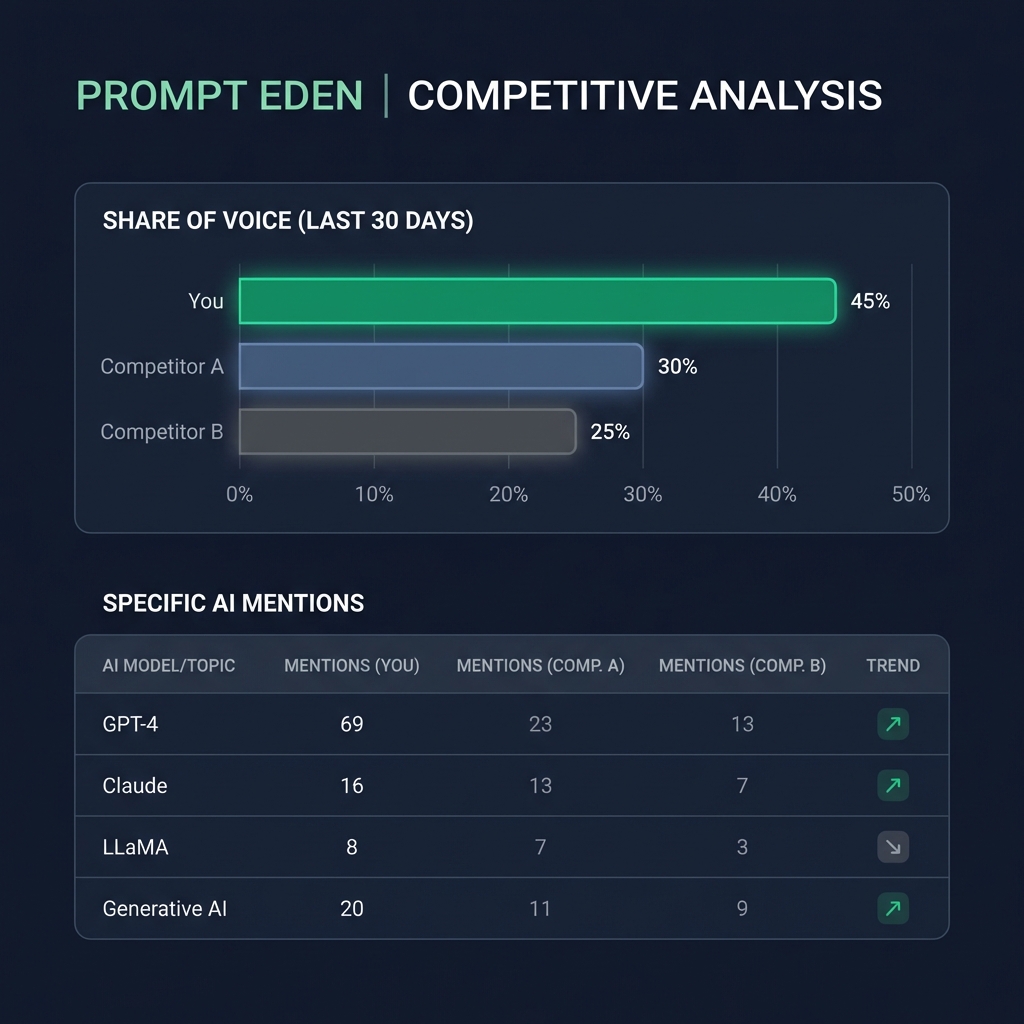
Share of voice in AI search is the percentage of relevant AI responses that mention your brand compared to competitors. It is the single most important metric for AI competitive intelligence, and it requires structured measurement to track. Before you start monitoring competitors, you need to know what you are measuring. Here are the key signals. ### Share of voice
Share of voice answers one question: when AI talks about your category, how often does your brand come up relative to competitors? To calculate it, you need a consistent set of prompts that represent your market. Run them across AI platforms regularly, count brand mentions, and compare percentages. ### Visibility Score
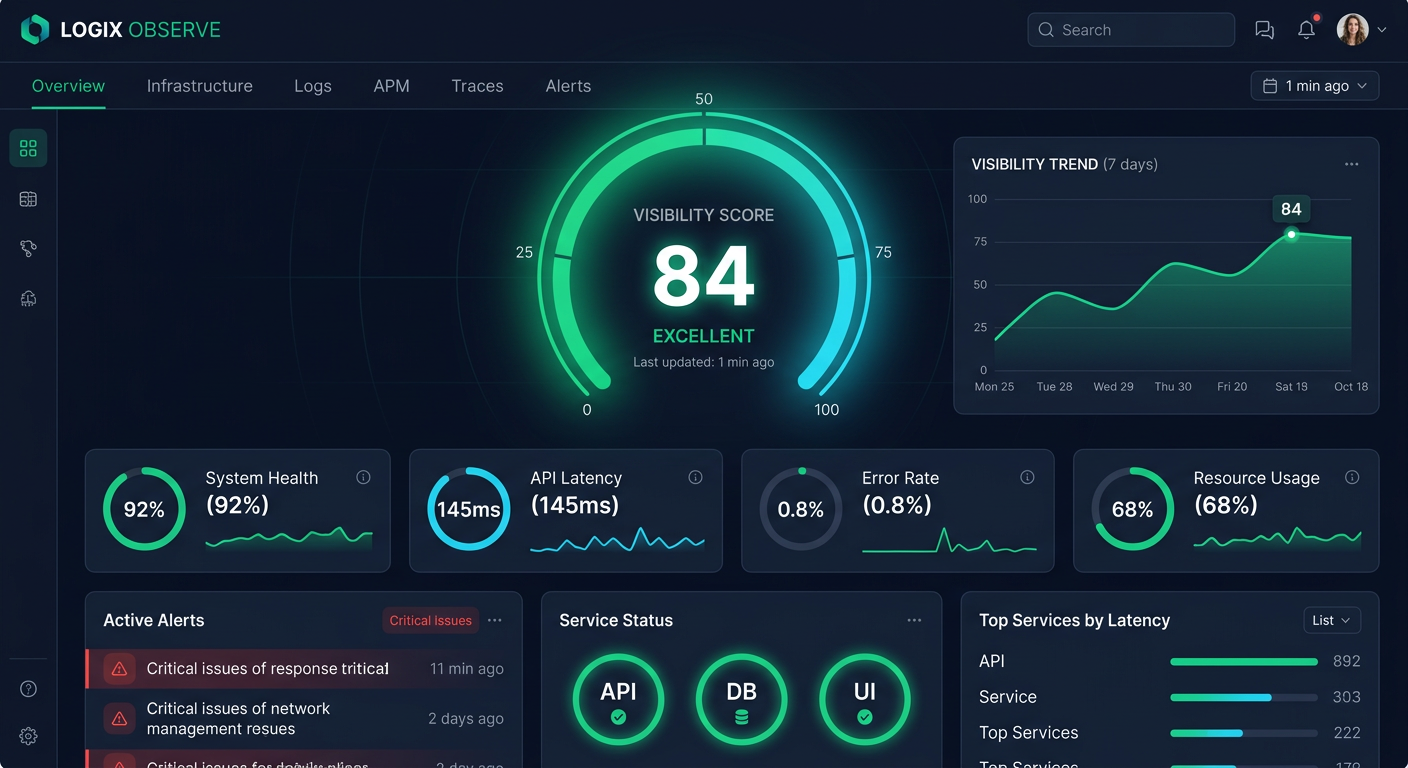
A raw mention count does not tell the full story. Prompt Eden uses a Visibility Score that combines four components into a single composite metric:
- Presence - Does the AI mention the brand at all? - Prominence - How featured is the brand in the response? Is it a passing mention or a detailed recommendation? - Ranking - Where does the brand appear in lists? First, third, last? - Recommendation - Does the AI actively recommend the brand, or just acknowledge it exists? A competitor scoring high on Recommendation is a bigger threat than one that gets mentioned in passing. The component breakdown reveals where each rival is strongest. ### Citation sources
Citation tracking reveals which websites and sources AI models reference when discussing your competitors. This tells you where competitors are building their authority and where you have gaps. If a competitor gets cited from industry publications and review sites but you only get cited from your own website, that is an actionable gap you can close with targeted content. ### Positioning and sentiment
Track how AI describes each competitor. Does it position them as affordable? Enterprise-grade? Easy to use? The language AI uses reflects the information ecosystem around that brand, and it shapes how buyers perceive the competitive landscape. ### Platform distribution
A competitor might dominate in ChatGPT responses but barely appear in Perplexity or Gemini. Platform-level tracking reveals these imbalances and helps you understand where each rival is strongest.
How to Build an AI Competitor Monitoring Framework
An AI competitor monitoring framework is a repeatable process for tracking, measuring, and responding to competitor visibility across AI search platforms. Here is the step-by-step process for building one. ### Step 1: Define your competitive prompt set
Start by writing prompts that represent how buyers in your market ask AI for recommendations. These fall into a few categories:
Category queries
- "What are the best [your category] tools?"
- "Top [your category] platforms for [use case]"
- "Compare [your category] solutions"
Use case queries
- "What tool should I use for [specific job]?"
- "Best solution for [industry] [problem]"
- "Recommend a [category] for [team size]"
Direct comparison queries
- "[Your brand] vs [competitor]"
- "[Competitor A] vs [Competitor B]"
- "Alternatives to [competitor]"
Problem queries
- "How do I solve [problem your product addresses]?"
- "What is the best way to [task]?"
Prompt Eden lets you monitor prompts on a schedule that fits your needs, with daily refresh on Starter and above. ### Step 2: Choose your AI platforms
Do not limit yourself to one model. Prompt Eden monitors 9 AI platforms including ChatGPT, Claude, Gemini, Perplexity, Google AI Overviews, and more. Each platform draws from different data sources and training sets, so competitor visibility can vary significantly across them. At minimum, track across ChatGPT, Claude, Gemini, and Perplexity. These represent the bulk of AI search volume for most markets. ### Step 3: Establish your baseline
Before you can track changes, you need a starting point. Run your full prompt set across all platforms and record:
- Which competitors appear for each prompt
- How frequently each brand is mentioned overall
- The Visibility Score for each competitor
- Which citation sources support each brand
- How AI positions and describes each competitor
This baseline becomes the reference point for all future comparisons. ### Step 4: Set up automated monitoring
Manual tracking does not scale. Even a modest prompt set across several platforms means hundreds of queries per cycle. With daily or weekly refresh, the volume quickly exceeds what any analyst can handle manually. Automated monitoring should:
- Run your prompt set on a consistent schedule
- Extract brand mentions from each response
- Calculate share of voice and Visibility Scores
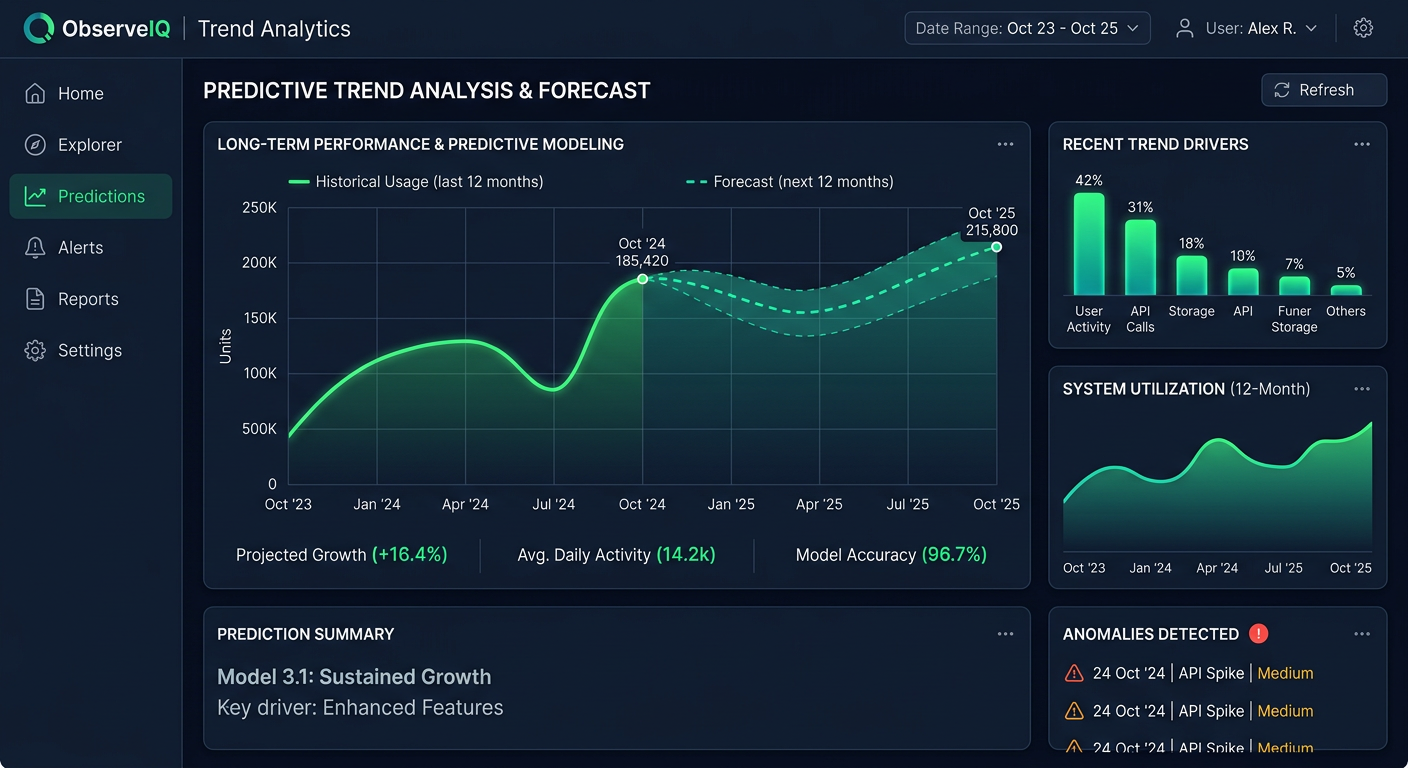
- Track changes over time
- Flag significant shifts
Prompt Eden's Organic Brand Detection automatically discovers competitor mentions without requiring you to manually define a competitor list, which catches new entrants and adjacent-category threats you might not anticipate. ### Step 5: Build your competitive dashboard
Organize your data into a view that supports decisions. Key views include:
- Share of voice trends over time (weekly or monthly)
- Platform breakdown showing where each competitor is strongest
- Citation source comparison across competitors
- Prompt-level detail showing which queries each competitor wins
- Alert log for significant changes
For teams on the Pro plan or above, Prompt Eden offers API access with JSON responses and CSV export for custom reporting.
Analyzing What You Find: A Competitive Intelligence Playbook
Collecting data is the easy part. The value comes from knowing what to do with it. ### When a competitor's share of voice is rising
A competitor gaining share of voice is a signal, not a crisis. Investigate before reacting:
- Check the source. Is the gain across all platforms or concentrated in one? A spike in Perplexity mentions but flat performance in ChatGPT suggests the competitor is building content that Perplexity's real-time search surfaces, not necessarily improving their overall AI presence. 2. Examine citation sources. Use Citation Intelligence to see what new sources are driving mentions. Did they get a favorable review? A press hit? A new integration announcement? The citation trail tells you exactly what is fueling their rise. 3. Assess the prompt types. Are they gaining on category queries ("best CRM tools"), use case queries ("CRM for real estate agents"), or comparison queries? Each requires a different response. 4. Measure the rate. A slow, steady increase over months suggests a sustained content strategy. A sudden spike often traces back to a single event like a product launch or viral article. ### When a new competitor appears
Organic Brand Detection will flag brands that start appearing in your tracked prompts for the first time. When this happens:
- Research the new entrant. Are they a direct competitor or an adjacent category player? - Track their mention frequency over a few cycles. A single appearance is noise. Repeated mentions are a signal. - Map their citation sources. Where are they getting authority? - Decide whether to respond with positioning content or simply monitor. ### When your share of voice drops
A drop in your share of voice means either competitors improved or your own signals weakened. Diagnose by:
- Comparing your citation sources month over month. Did you lose a key source? - Checking if a competitor launched new content that displaced you. - Reviewing whether AI model updates shifted the landscape (model updates affect all brands). - Examining platform-specific data. A drop on one platform with stability elsewhere narrows the problem. ### When you discover positioning gaps
If AI describes competitors with clear, specific language ("best for enterprise teams," "most affordable option") but describes your brand vaguely, that is a positioning gap in your content ecosystem. The fix is not to change AI directly. It is to publish clearer, more specific content that AI can reference. See our guide on optimizing for AI search for tactical steps.
Comparing AI Competitive Intelligence Approaches
Not every team will use the same approach. Here is an honest comparison of the options. ### Manual monitoring
Pros:
- Free to start
- Direct observation of AI responses
- Good for one-time audits
Cons:
- Does not scale past a handful of prompts
- No historical data or trend tracking
- Inconsistent timing makes comparison unreliable
- Time-intensive, especially across multiple platforms
Manual monitoring works for initial exploration. It breaks down when you need ongoing competitive intelligence across multiple platforms and prompt sets. ### Spreadsheet tracking
Pros:
- Low cost
- Customizable
- Full control over methodology
Cons:
- Requires dedicated analyst time
- No automated data collection
- Error-prone at scale
- Difficult to maintain consistency over months
Some teams build spreadsheet systems where analysts manually query AI platforms and log results. This works for small prompt sets but becomes unsustainable quickly. ### Dedicated AI visibility tools
Pros:
- Automated data collection across platforms
- Historical trend data
- Competitive benchmarking built in
- Alerts for significant changes
- Scalable to hundreds of prompts
Cons:
- Monthly cost
- Learning curve for new category
- Requires prompt set design
Prompt Eden falls in this category, monitoring dozens of LLM platforms with automated Organic Brand Detection, Visibility Scores, and Citation Intelligence. Plans range from a Free tier with weekly refresh to Business with three-hourly refresh. ### Traditional SEO tools with AI features
Pros:
- Already in your stack
- Familiar interface
- Bundled with SEO data
Cons:
- AI features are often limited to Google AI Overviews
- Shallow LLM coverage (usually one to three models)
- Built for SEO first, AI monitoring second
- Miss the multi-platform view that matters for competitive intelligence
Tools like Semrush and Ahrefs have started adding AI features, but they were designed for traditional search and their AI coverage is narrow compared to purpose-built alternatives. ### Choosing the right approach
Match the approach to your needs:
- Exploring AI search for the first time? Start with manual monitoring and a free tool tier. - Running competitive analysis quarterly? A spreadsheet system might work. - Need ongoing competitive intelligence? A dedicated tool with automated monitoring is the practical choice. - Managing multiple brands or clients? You need multi-project support and team collaboration, like agency workflows.
Putting It Into Practice: Your First Month
Here is a practical timeline for getting AI competitive intelligence running. ### Week 1: Discovery
List your known competitors. 2. Write prompts that represent how buyers ask about your category. 3. Manually run those prompts across ChatGPT, Claude, and Perplexity. 4. Record which brands appear and how they are described. 5. Note any brands you did not expect. You can use the AI Query Generator to help brainstorm prompts that match how real users ask about your category. ### Week 2: Setup
Choose your monitoring tool and configure your prompt set. 2. Set up tracking across your priority AI platforms. 3. Let Organic Brand Detection run for a full cycle to surface competitors you missed. 4. Establish your baseline metrics: share of voice, Visibility Score, citation sources. ### Week 3: Analysis
Review your first full data set. 2. Identify the top competitive threats based on share of voice. 3. Map citation sources for your top competitors. 4. Note where competitors are strong and where they are weak. 5. Identify the prompts where your brand is absent but competitors are present. ### Week 4: Action
Prioritize content pieces that address your biggest visibility gaps. 2. Create content targeting the prompts where competitors outperform you. 3. Set up alerts for competitive changes. Prompt Eden supports automated alerts for significant shifts in share of voice. 4. Schedule a recurring review cadence: weekly check-ins, monthly deep dives, quarterly strategy reviews. ### Ongoing rhythm
After the initial month, your competitive intelligence should run on autopilot with regular reviews:
- Weekly: Check alerts, review share of voice trends, note any new entrants. - Monthly: Deep dive into citation sources, analyze positioning shifts, update content priorities. - Quarterly: Full competitive strategy review, adjust prompt sets, evaluate tool effectiveness. Teams that stick to this rhythm catch competitive shifts early. Teams that monitor sporadically end up reacting to problems that could have been prevented.